
Data-Driven Marketing Tactics That Boost Results
Over 80 percent of American marketers now rely on advanced analytics to guide their campaigns and decisions. With digital tools reshaping every interaction, staying data-driven is not just a trend but a necessity for any business aiming to thrive. This article uncovers how precise data, smart segmentation, and real-time insights can turn every marketing move into a measurable advantage.
Table of Contents
- What Data-Driven Marketing Tactics Mean
- Types of Data and Marketing Channels
- How Personalization Drives Conversions
- Integrating A/B Testing and Analytics
- Common Pitfalls and How to Avoid Them
Key Takeaways
| Point | Details |
|---|---|
| Data-Driven Marketing Revolutionizes Strategy | This approach shifts from intuition-based to analytics-enabled decision making, transforming customer data into strategic insights for targeted marketing. |
| Personalization Enhances Customer Engagement | AI-driven strategies create tailored experiences, driving conversions and fostering brand loyalty through individual customer needs recognition. |
| Robust A/B Testing Is Essential | This technique allows marketers to optimize performance by comparing variations and analyzing user behavior to inform future strategies. |
| Avoiding Common Pitfalls Is Crucial | Ensuring data quality and maintaining a proactive approach to ethical data use and continuous learning can enhance marketing effectiveness. |
What Data-Driven Marketing Tactics Mean
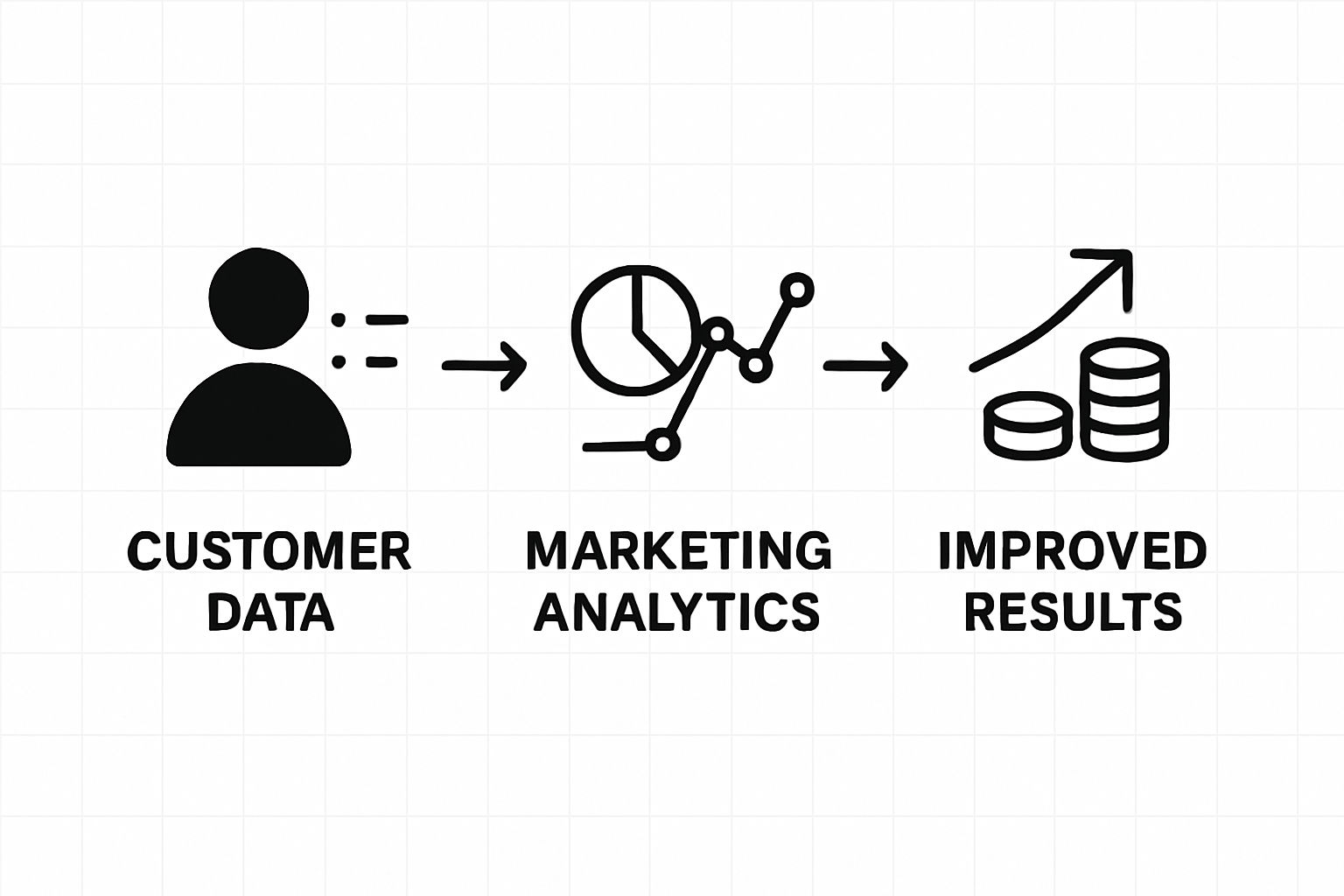
Data-driven marketing represents a profound shift from traditional intuition-based strategies to precision-powered, analytics-enabled decision making. At its core, this approach transforms raw customer information into strategic insights that guide targeted marketing efforts.
Modern marketing now revolves around collecting, analyzing, and leveraging granular data points across multiple customer touchpoints. Digital technologies have revolutionized how businesses understand consumer behavior, enabling marketers to move beyond generic campaigns toward hyper-personalized experiences. Every click, interaction, and engagement becomes a valuable data signal that can inform strategic decisions.
The implementation of data-driven marketing tactics involves a sophisticated process of gathering, interpreting, and acting on customer data. Businesses can develop comprehensive algorithms that translate complex data sets into actionable marketing strategies, creating a systematic approach to understanding and predicting consumer preferences. Key components of this approach include:
- Customer segmentation based on behavioral patterns
- Real-time performance tracking
- Predictive analytics for future campaign optimization
- Dynamic personalization techniques
Successful data-driven marketing requires robust technological infrastructure, advanced analytical skills, and a strategic mindset that views data not just as information, but as a critical business asset. Marketers must continuously evolve their approach, integrating emerging technologies and refining their data collection and interpretation methodologies to stay competitive in an increasingly digital landscape.
Types of Data and Marketing Channels
Marketing professionals today leverage multiple data types and channels to create comprehensive strategies that reach and engage target audiences. The PESO Model provides a critical framework for understanding these diverse marketing communication channels, categorizing media into four essential types: Paid, Earned, Shared, and Owned media.

Paid Channels represent direct advertising investments, including digital ads, sponsored content, and pay-per-click campaigns. Earned Channels involve media coverage, public relations efforts, and organic word-of-mouth recommendations that build brand credibility without direct financial investment. Shared Channels encompass social media platforms and collaborative digital spaces where brands interact with audiences through user-generated content and community engagement. Owned Channels include company websites, blogs, email newsletters, and other proprietary digital assets that provide direct communication pathways.
Targeted advertising techniques transform raw data into precision marketing strategies, enabling businesses to create highly personalized customer experiences. Key data types used in these approaches include:
- Demographic data (age, location, income)
- Behavioral data (browsing history, purchase patterns)
- Psychographic data (interests, lifestyle preferences)
- Contextual data (device type, time of interaction)
Successful marketing requires a strategic blend of these channels and data types, continuously analyzing performance metrics and adapting approaches to maximize audience engagement and conversion potential. Modern marketers must remain agile, leveraging technological tools that enable sophisticated data collection, interpretation, and targeted communication strategies.
How Personalization Drives Conversions
AI-driven personalized marketing strategies are transforming how businesses connect with customers, creating unprecedented opportunities for meaningful engagement and conversion optimization. Personalization has evolved from a marketing buzzword to a critical strategy that directly impacts consumer decision making and brand loyalty.

The power of personalization lies in its ability to create tailored experiences that speak directly to individual customer needs and preferences. Behavioral segmentation allows marketers to craft messages that resonate on a deeply individual level, moving beyond generic communication to contextually relevant interactions. By analyzing historical data, browsing patterns, and previous purchase behaviors, businesses can predict and anticipate customer desires before they are explicitly expressed.
Digital marketing analytics enable sophisticated personalization techniques that transform raw data into meaningful customer experiences. Key personalization strategies that drive conversions include:
- Dynamic content adjustment based on user profiles
- Personalized product recommendations
- Targeted email marketing campaigns
- Customized landing page experiences
- Real-time interaction personalization
Successful personalization requires a delicate balance between data utilization and customer privacy. Modern consumers appreciate relevant recommendations but remain sensitive about data usage. Marketers must develop transparent, ethical approaches that prioritize customer trust while delivering exceptional, individualized experiences that demonstrate genuine understanding of customer needs and preferences.
Integrating A/B Testing and Analytics
Deep learning frameworks for marketing analytics are revolutionizing how businesses approach data-driven decision making. A/B testing and analytics represent powerful complementary strategies that enable marketers to move beyond intuition and into precise, measurable optimization techniques.
The core of effective A/B testing lies in its ability to compare two versions of a marketing asset, isolating specific variables to understand their impact on user behavior. Statistical significance becomes the cornerstone of these experiments, allowing marketers to distinguish between random variations and meaningful performance differences. By systematically testing elements like headlines, images, call-to-action buttons, and page layouts, businesses can incrementally improve conversion rates and user experience.
Data-driven decision making transforms marketing strategies by providing actionable insights that go beyond surface-level metrics. Key integration strategies for A/B testing and analytics include:
- Establishing clear, measurable hypotheses before testing
- Collecting comprehensive baseline performance data
- Defining precise success metrics
- Ensuring statistically valid sample sizes
- Implementing continuous learning cycles
- Cross-referencing multiple data sources
Successful integration requires a holistic approach that views A/B testing not as a one-time activity, but as an ongoing process of incremental optimization. Marketers must develop a culture of experimentation, where data insights drive strategic decisions and continuous improvement becomes the standard approach to marketing performance.
Common Pitfalls and How to Avoid Them
Computational studies of marketing strategies reveal significant challenges that can undermine data-driven efforts. Understanding these potential obstacles is crucial for developing robust, effective marketing approaches that minimize risks and maximize performance.
One of the most critical pitfalls is data quality mismanagement, which occurs when marketers rely on incomplete, outdated, or improperly collected information. This can lead to misguided strategies that waste resources and potentially damage brand reputation. Common errors include failing to clean and validate data, overlooking sampling biases, and drawing conclusions from statistically insignificant datasets.
Complex data integration challenges require comprehensive strategic approaches to ensure marketing effectiveness. Key pitfalls and their mitigation strategies include:
- Insufficient data privacy protections
- Lack of clear analytical objectives
- Overlooking contextual data interpretation
- Ignoring regulatory compliance requirements
- Relying on single-source data points
- Failing to update analytical models regularly
Successful data-driven marketing demands a proactive, holistic approach that prioritizes ethical data usage, continuous learning, and adaptive strategies. Marketers must develop a critical mindset that questions assumptions, validates findings, and remains flexible in the face of changing technological and regulatory landscapes.
Unlock the Power of Data-Driven Marketing with Effortless Optimization
The article underscores the crucial challenge marketers face in transforming complex customer data into actionable strategies while continuously testing and refining campaigns for maximum impact. Pain points such as managing A/B testing at scale, achieving real-time insights, and personalizing experiences without technical hurdles are at the heart of successful data-driven marketing. Concepts like A/B testing, real-time analytics, and dynamic personalization are essential yet often difficult to execute efficiently.
That is where Stellar comes in. Designed specifically for marketers and growth hackers at small to medium-sized businesses, Stellar offers a powerful A/B Testing Tool with a no-code visual editor that lets you test and personalize campaigns quickly without technical complexity. Its lightweight script ensures your site speed stays fast while advanced goal tracking and real-time analytics provide the data clarity you need to confidently optimize and scale your marketing efforts.
Ready to put control of your data-driven marketing tactics into your hands now
Experience how Stellar transforms overwhelming data into winning campaigns. Start your free plan today and turn insights into actions at Stellar’s platform. Explore the features like Dynamic Keyword Insertion to deliver hyper-personalized content that boosts conversions and outperforms generic messaging. Don’t let complicated tools slow your growth. Visit https://gostellar.app and begin making smarter, faster marketing decisions today.
Frequently Asked Questions
What is data-driven marketing?
Data-driven marketing is an approach that utilizes customer data to guide marketing strategies and decision-making, moving away from intuition-based methods to data-informed insights.
How can personalization improve marketing results?
Personalization enhances marketing effectiveness by tailoring experiences and messages to individual customer needs and preferences, which can lead to higher engagement and conversion rates.
What types of data are important for data-driven marketing?
Key types of data include demographic data (age, location, income), behavioral data (browsing history, purchase patterns), psychographic data (interests, lifestyle preferences), and contextual data (device type, time of interaction).
What are common pitfalls in data-driven marketing, and how can they be avoided?
Common pitfalls include poor data quality, insufficient privacy protections, and lack of clear objectives. To avoid these issues, maintain data hygiene, ensure compliance with regulations, and regularly update analytical models.
Recommended
Published: 12/10/2025