
Eco-Friendly Ecommerce – Why It Matters for SMBs
Shipping boxes pile up, energy bills climb, and customers start asking tough questions about your brand’s impact on the planet. For Ecommerce managers looking to balance growth with responsibility, embracing eco-friendly e-commerce means more than swapping packaging materials. It is about rethinking operations from supply chains to data centers, all while facing real challenges unique to online retail. Discover how thoughtful shifts toward sustainability can resonate with buyers and build lasting trust.
Table of Contents
- Eco-Friendly Ecommerce Defined and Debunked
- Types of Sustainable Practices in Ecommerce
- Implementing Energy-Efficient Technologies
- Greener Logistics and Packaging Solutions
- Legal Requirements and Industry Standards
- Risks, Costs, and Common Pitfalls
Key Takeaways
| Point | Details |
|---|---|
| Sustainable E-Commerce Focus | Eco-friendly e-commerce emphasizes reducing environmental impact through efficient practices and stakeholder collaboration. |
| Energy-Efficient Technologies | Investing in green IT infrastructure and energy-efficient logistics is crucial for lowering operational costs and minimizing environmental footprints. |
| Legal Compliance Importance | Staying updated on environmental regulations and sustainability standards is essential for building consumer trust and avoiding legal pitfalls. |
| Financial and Operational Balance | Businesses must navigate the financial risks of sustainable practices by implementing gradual changes and leveraging available resources. |
Eco-Friendly Ecommerce Defined and Debunked
Eco-friendly e-commerce represents a transformative approach to online retail that prioritizes environmental sustainability across digital business operations. Unlike traditional e-commerce models that often generate significant carbon footprints, this progressive strategy seeks to minimize ecological impact while maintaining business efficiency.
At its core, sustainable e-commerce involves intentionally reducing environmental harm through strategic practices. Sustainability transitions in e-commerce emphasize embedding ecological considerations into every aspect of online retail. These considerations include multiple dimensions:
- Minimizing packaging waste
- Reducing carbon emissions from shipping
- Implementing circular economy principles
- Selecting environmentally responsible suppliers
- Developing energy-efficient digital infrastructure
The challenges of implementing eco-friendly e-commerce are significant. Online retail inherently involves complex logistics that can generate substantial environmental strain. Shipping frequencies, product returns, and packaging materials represent primary areas of ecological concern.
Key sustainability challenges in e-commerce include:
- High transportation emissions from individual product deliveries
- Excessive packaging materials
- Energy consumption of digital platforms
- Electronic waste from product returns
Successful eco-friendly e-commerce requires collaborative efforts from multiple stakeholders. Retailers must innovate, governments need supportive policies, and consumers should make conscious purchasing decisions.
Here is a summary of key eco-friendly e-commerce challenges and who plays a leading role in addressing them:
| Sustainability Challenge | Who Is Most Responsible | Example Action |
|---|---|---|
| High shipping emissions | Retailers & Logistics | Route consolidation |
| Excessive packaging | Retailers & Suppliers | Minimal packaging design |
| Digital energy consumption | IT Teams | Server virtualization |
| Electronic waste from returns | Retailers & Consumers | Improved product info |
| Regulatory compliance | Business Owners | Regular legal audits |
Pro tip: Start by conducting a comprehensive carbon audit of your current e-commerce operations to identify specific areas for sustainable improvement.
Types of Sustainable Practices in Ecommerce
Sustainable practices in e-commerce encompass a comprehensive approach to minimizing environmental impact across digital retail operations. These practices go beyond simple recycling, transforming how online businesses approach ecological responsibility.
Green sustainable practices in e-commerce involve multiple strategic interventions across different business dimensions. The most effective sustainability strategies typically include:
-
Renewable Energy Integration
- Powering data centers with solar or wind energy
- Using green hosting providers
- Implementing energy-efficient server technologies
-
Sustainable Packaging Solutions
- Biodegradable packaging materials
- Minimalist packaging design
- Recyclable shipping containers
-
Logistics and Transportation
- Optimizing delivery routes
- Utilizing electric or low-emission vehicles
- Consolidating shipments to reduce carbon footprint
E-commerce businesses can significantly reduce their environmental impact by strategically addressing supply chain management. This involves selecting environmentally conscious suppliers, implementing waste reduction policies, and developing digital solutions for sustainability tracking.
Key sustainability strategies also include:
- Carbon offsetting programs
- Digital waste management
- Circular economy principles
- Transparent environmental reporting
Technology plays a crucial role in enabling sustainable e-commerce practices. Advanced analytics, AI-driven optimization, and innovative digital tools help businesses measure, track, and continuously improve their environmental performance.
Pro tip: Conduct a comprehensive sustainability audit to identify specific areas where your e-commerce operations can reduce environmental impact and implement targeted improvement strategies.
Implementing Energy-Efficient Technologies
Energy-efficient technologies represent a critical frontier for sustainable e-commerce, enabling businesses to dramatically reduce their environmental footprint while maintaining operational excellence. Energy-efficient technologies in digital commerce have evolved from niche considerations to strategic imperatives for forward-thinking organizations.
Key technological interventions for energy efficiency in e-commerce include:
-
Green IT Infrastructure
- Cloud computing with renewable energy sources
- Energy-efficient server architectures
- Virtualization to reduce hardware requirements
-
Smart Data Center Solutions
- Advanced cooling technologies
- Power management systems
- High-efficiency computing hardware
-
Sustainable Logistics Technologies
- Route optimization algorithms
- Electric vehicle fleet management
- Predictive analytics for shipment consolidation
Artificial intelligence and blockchain technologies are transforming energy management in digital commerce. These advanced systems enable precise tracking, optimization, and reduction of energy consumption across complex operational networks.
Key strategies for implementing energy-efficient technologies include:
- Conducting comprehensive energy audits
- Investing in renewable energy infrastructure
- Adopting AI-driven optimization tools
- Implementing adaptive power management systems
Small to medium-sized businesses can leverage these technologies to not only reduce environmental impact but also significantly lower operational costs. The investment in energy-efficient technologies pays dividends through reduced electricity expenses and enhanced brand reputation.

Pro tip: Prioritize incremental technology adoption by first mapping your current energy consumption and identifying the most impactful areas for efficiency improvements.
Greener Logistics and Packaging Solutions
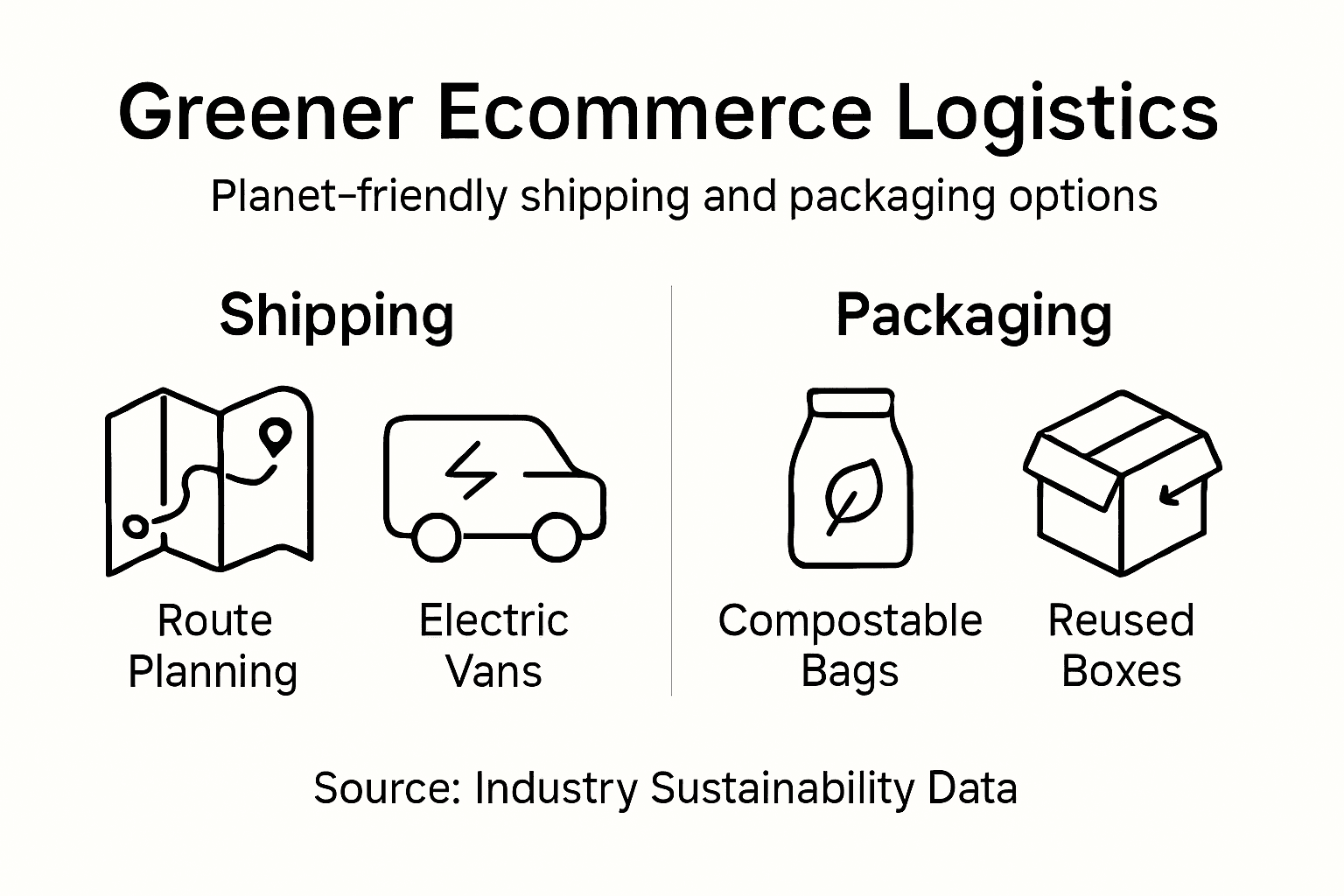
Sustainable logistics represent a critical transformation in e-commerce, addressing the substantial environmental challenges associated with online retail delivery systems. Greener logistics strategies are rapidly evolving from optional considerations to fundamental business practices for environmentally responsible companies.
Key approaches to greener logistics and packaging include:
-
Delivery Optimization
- Electric vehicle fleet deployment
- Route optimization algorithms
- Consolidated shipping strategies
-
Sustainable Packaging Innovations
- Biodegradable packaging materials
- Minimalist packaging design
- Recyclable and compostable shipping containers
-
Waste Reduction Techniques
- Reverse logistics programs
- Product return minimization
- Packaging material recycling initiatives
The environmental impact of e-commerce logistics is substantial. Small to medium-sized businesses can significantly reduce their carbon footprint by implementing strategic approaches that prioritize efficiency and sustainability.
Key strategies for greener logistics include:
- Implementing carbon tracking systems
- Investing in low-emission transportation
- Developing circular packaging solutions
- Creating incentives for sustainable customer behaviors
Technology plays a crucial role in enabling more sustainable logistics. Advanced analytics, machine learning algorithms, and innovative tracking systems help businesses optimize delivery routes, reduce empty transportation miles, and minimize overall environmental impact.
Pro tip: Conduct a comprehensive logistics audit to identify specific areas where your e-commerce operations can reduce emissions and implement targeted sustainability improvements.
Legal Requirements and Industry Standards
Environmental compliance in e-commerce has become increasingly complex, requiring businesses to navigate a sophisticated landscape of global and regional regulations. Legal frameworks for sustainable e-commerce are rapidly evolving to address the growing environmental challenges associated with digital retail.
Key legal requirements and industry standards encompass multiple critical areas:
-
Environmental Disclosure
- Carbon footprint reporting
- Transparency in sustainability practices
- Mandatory environmental impact assessments
-
Packaging Regulations
- Waste management compliance
- Restrictions on single-use packaging
- Recycling and circular economy standards
-
Product Labeling Requirements
- Eco-labeling standards
- Sustainable product certification
- Environmental performance transparency
Small to medium-sized businesses must remain vigilant about emerging legal standards that impact their operations. These regulations are not just compliance requirements but opportunities to demonstrate corporate responsibility and build consumer trust.
Key compliance strategies include:
- Regular legal and regulatory audits
- Implementing robust tracking systems
- Developing transparent reporting mechanisms
- Training staff on environmental regulations
International organizations are pushing for harmonized standards that create consistent expectations across different markets. This global approach helps businesses understand and meet environmental requirements more effectively, regardless of their operational geography.
Pro tip: Consult with environmental compliance experts to develop a comprehensive understanding of the legal requirements specific to your business's geographic and industry context.
Risks, Costs, and Common Pitfalls
Sustainable e-commerce transformation demands strategic planning and careful navigation of complex challenges. Risks in green entrepreneurship reveal that small to medium-sized businesses face significant obstacles when implementing environmental strategies.
Critical risks and potential pitfalls in eco-friendly e-commerce include:
-
Financial Challenges
- Higher upfront investment costs
- Potential short-term profitability reduction
- Complex return on investment calculations
-
Operational Complexities
- Supply chain restructuring
- Technology integration expenses
- Increased logistics management requirements
-
Compliance and Credibility Risks
- Avoiding greenwashing accusations
- Meeting evolving regulatory standards
- Maintaining transparent environmental reporting
Implementing sustainable practices requires businesses to balance environmental commitments with economic feasibility. The potential costs can seem daunting, but strategic approaches can mitigate financial risks.
This table contrasts two types of common sustainable e-commerce investments:
| Investment Area | Upfront Cost Level | Main Benefit | Long-Term ROI Potential |
|---|---|---|---|
| Energy Efficiency | Moderate to High | Lower operating expenses | Significant savings |
| Greener Logistics | Moderate | Reduced emissions | Increased brand loyalty |
Key risk mitigation strategies include:
- Gradual sustainability implementation
- Seeking green technology grants
- Developing clear environmental metrics
- Investing in staff training programs
Consumers are increasingly sophisticated in evaluating corporate environmental claims. Businesses must demonstrate genuine commitment through transparent, measurable sustainability efforts that go beyond superficial marketing tactics.
Pro tip: Develop a comprehensive sustainability roadmap that balances environmental goals with financial constraints, allowing for phased implementation and continuous improvement.
Boost Your Eco-Friendly Ecommerce Success with Smarter Testing
The journey toward sustainable e-commerce is filled with challenges like reducing shipping emissions, minimizing packaging waste, and optimizing digital infrastructure. As highlighted in the article, small to medium-sized businesses must strategically address these pain points through measurable improvements and ongoing innovation. Achieving true sustainability means making decisions based on real data that drive both environmental and business goals.

Take control of your eco-friendly ecommerce growth today by streamlining your marketing experiments with Stellar’s powerful A/B Testing Tool. Our lightweight, no-code visual editor lets marketers and growth hackers at SMBs quickly test ideas that enhance user experience while reducing performance impact. With advanced goal tracking and real-time analytics, you can make data-driven decisions to optimize campaigns responsibly and align with your sustainability efforts. Explore how dynamic keyword insertion personalizes landing pages for diverse eco-conscious audiences.
Start your sustainable growth journey now by visiting Stellar and unlock fast, effective experimentation that supports your green ecommerce vision.
Frequently Asked Questions
What is eco-friendly e-commerce?
Eco-friendly e-commerce refers to online retail practices that prioritize environmental sustainability by reducing carbon footprints, minimizing waste, and utilizing green technologies in operations.
Why is eco-friendly e-commerce important for small and medium-sized businesses (SMBs)?
Eco-friendly e-commerce is crucial for SMBs as it enhances brand reputation, meets growing consumer demand for sustainable practices, and can lead to cost savings through energy efficiency and reduced waste.
What are some common challenges in implementing eco-friendly e-commerce practices?
Common challenges include managing high transportation emissions, excessive packaging waste, energy consumption from digital operations, and navigating compliance with environmental regulations.
How can my SMB start adopting sustainable practices in e-commerce?
Your SMB can start by conducting a carbon audit to identify areas for improvement, integrating renewable energy solutions, optimizing logistics for efficiency, and selecting environmentally responsible suppliers.
Recommended
- 7 Common Ecommerce UX Issues and How to Fix Them
- Tendencias de ecommerce 2025 para impulsar tu crecimiento online
- Understanding Content Marketing for Ecommerce Success
- Comprendre les plateformes ecommerce : fonctionnement et enjeux
- Marketing Without Third-Party Cookies: What Canadian SMEs Need to Know
Published: 1/29/2026