
Personalizing Website Content for Higher Conversions
More than 80 percent of businesses say they struggle to deliver website experiences that feel truly personal to each visitor. The way people interact with your site is shaped by unique needs and motivations that simple demographics miss. Understanding the real drivers behind your audience segments is key if you want to create content that actually connects. You’ll gain practical strategies here to analyze user intent, set up the right tools, and transform your site into a place where every visitor feels understood.
Table of Contents
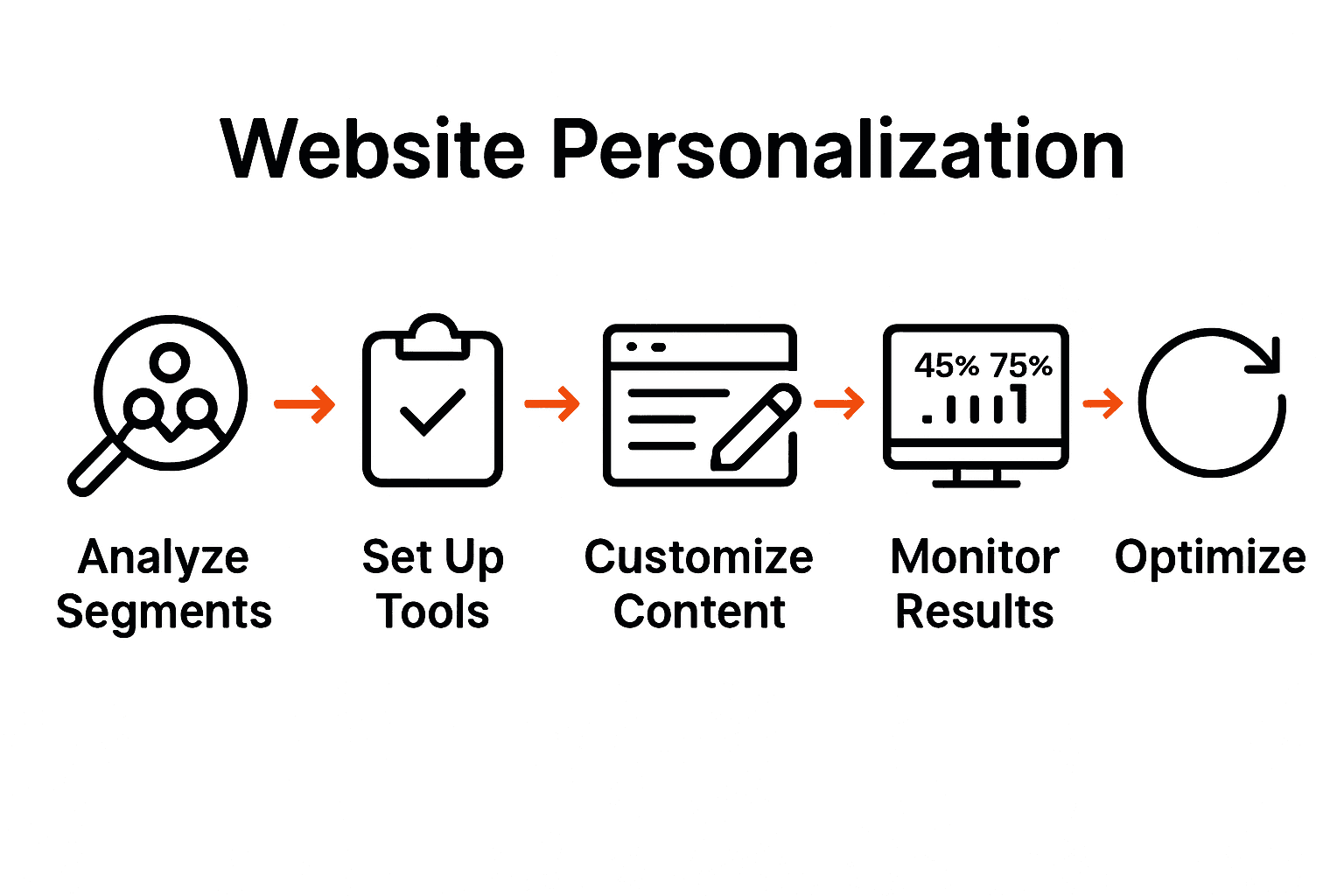
- Step 1: Analyze Audience Segments And Intent
- Step 2: Set Up Personalization Tools And Integrations
- Step 3: Customize Content Elements For Each Audience
- Step 4: Launch And Monitor Personalized Experiences
- Step 5: Test And Optimize Content For Better Results
Quick Summary
| Key Point | Explanation |
|---|---|
| 1. Understand audience needs deeply | Go beyond demographics to analyze motivations and pain points for personalized content. |
| 2. Utilize effective personalization tools | Choose analytics tools that facilitate robust segmentation and real-time content adjustments. |
| 3. Customize content for specific segments | Adapt website elements like language and visuals to resonate with different audience groups. |
| 4. Monitor and refine personalization efforts | Track user interactions and adjust strategies based on engagement metrics and performance results. |
| 5. Implement A/B testing for optimization | Systematically test different webpage elements to identify what improves conversion rates effectively. |
Step 1: Analyze audience segments and intent
Understanding your audience goes far beyond basic demographics. Effective audience segmentation requires a nuanced approach that helps you create personalized experiences that resonate deeply with different user groups. According to research from Oregon State University, successful marketing strategies depend on identifying and creating precise audience subgroups.
To analyze audience segments effectively, start by collecting comprehensive data across multiple dimensions. The Journal of Applied Marketing Management recommends categorizing interactions using four key attributes demographic, geographic, psychographic, and behavioral characteristics. This means moving beyond basic age and location data to understand deeper motivations, preferences, and interaction patterns. For instance, track metrics like website browsing behavior, purchase history, engagement levels with previous content, and specific pain points or challenges your audience encounters.
Pro tip: Create detailed audience personas that capture not just statistical data but the emotional drivers behind user behavior. Imagine each segment as a unique individual with specific needs and aspirations. By developing rich, multidimensional profiles, you can craft content and experiences that feel genuinely personalized and compelling. The goal is to make each visitor feel like your website understands and anticipates their unique requirements.
Once you've mapped out your audience segments, you'll be ready to develop targeted content strategies that speak directly to each group's specific interests and needs. This sets the stage for more meaningful user interactions and significantly improved conversion potential.
Step 2: Set up personalization tools and integrations
Personalization tools are your gateway to creating targeted, dynamic website experiences that speak directly to different audience segments. According to Ohio State University, effective segmentation involves identifying precise visitor subsets and applying custom configurations to enhance user engagement.
To begin setting up your personalization infrastructure, start by selecting analytics and integration tools that offer robust segmentation capabilities. Media Development Investment Fund recommends implementing platforms that can track detailed user behavior and enable real-time content modifications. Look for solutions that provide features like dynamic content insertion, behavioral tracking, and automated personalization rules. Your ideal tool should seamlessly integrate with your existing website infrastructure and allow granular control over how different user segments experience your content.

Pro tip: Prioritize tools with lightweight implementation that wont slow down your website. Choose platforms that offer visual editors and no-code integration options to minimize technical complexity. When selecting your personalization solution, test its performance impact and ensure it aligns with your specific audience segmentation strategy.
As you implement these tools, remember that personalization is an iterative process. Start with basic segmentation rules and gradually refine your approach based on real user data and interaction patterns. The goal is to create an adaptive website experience that feels intuitive and relevant to each visitor.
Step 3: Customize content elements for each audience
Customizing website content for different audience segments is about creating targeted experiences that feel personal and relevant. According to Regional Arts & Culture Council, effective content personalization requires understanding the unique characteristics of specific audience groups such as age, language preferences, and income levels.
University of Minnesota research highlights the importance of categorizing audience members based on demographic, geographic, and psychographic characteristics. To customize content effectively, focus on adapting key website elements like headlines, images, value propositions, and call to action buttons. This might mean creating language specific versions for Spanish speaking visitors, developing different messaging for younger versus older professionals, or adjusting visual imagery to match the aesthetic preferences of specific demographic groups.
Pro tip: Create content variations that go beyond surface level changes. Think about emotional triggers, pain points, and motivational drivers unique to each audience segment. For example, a technology product might use more technical language for professional developers and more benefits focused messaging for small business owners.
Remember that content customization is an ongoing process of testing and refinement. Continuously analyze user engagement metrics to understand how different segments respond to your personalized content approach. The goal is to create a dynamic website experience that feels intuitive and compelling for each visitor.
Step 4: Launch and monitor personalized experiences
Understanding Personalization at Scale for Marketers begins with a strategic approach to launching and tracking your personalized website experiences. According to Space Talent, successful personalization requires a systematic five-step process that involves gathering insights, segmenting users, validating findings, and continuously acting on collected data.
To effectively launch and monitor your personalized experiences, implement robust tracking mechanisms that capture detailed user interactions. The Social and Behavior Change Communication Implementation Kit recommends developing comprehensive monitoring tools that track how different audience segments respond to your personalized content. Focus on key performance indicators such as engagement rates, conversion metrics, time on page, and bounce rates for each audience segment. Use real time analytics to quickly identify which personalization strategies are working and which need refinement.
Pro tip: Create a baseline measurement before launching personalized experiences so you can accurately compare performance. This allows you to quantify the impact of your personalization efforts and make data driven adjustments. Set up comparative dashboards that show how different audience segments interact with your customized content versus standard website experiences.
Remember that personalization is an iterative process. Continuously test, learn, and adapt your approach based on user feedback and performance data. The goal is to create a dynamic website experience that feels increasingly relevant and compelling with each interaction.
Step 5: Test and optimize content for better results
Content optimization is a critical process of continually refining your website experiences to drive higher conversions. 8 Essential Elements to Test on Websites for Growth provides insight into the strategic approach needed for effective testing. According to Audience Answers, successful content optimization involves systematically dividing audience groups and tailoring strategies to engage specific segments effectively.
To test and optimize your content, implement a structured A/B testing methodology that compares different variations of your website elements. Ivy Tech Community College emphasizes the importance of understanding audience characteristics to craft persuasive content. Focus on testing critical components such as headlines, call to action buttons, imagery, value propositions, and overall page layouts. Use statistical significance to validate your results and ensure that improvements are not just random variations but meaningful insights into user preferences.
Pro tip: Develop a comprehensive testing roadmap that prioritizes elements with the highest potential impact. Start with low hanging fruit like headline variations or button colors, then progressively move to more complex optimizations. Create a testing calendar that ensures consistent experimentation and tracks incremental improvements over time.
Remember that optimization is an ongoing journey. What works today might not work tomorrow, so maintain a curious and experimental mindset. Continuously gather user feedback, analyze performance metrics, and be prepared to adapt your strategies as audience behaviors evolve.
Drive Higher Conversions by Personalizing Your Website Content Today
Personalizing website content to better connect with distinct audience segments is no longer optional. As the article highlights, understanding your visitors deeply and customizing content based on behavioral insights can transform engagement and boost conversions dramatically. Yet, marketers often struggle with tools that are either too complex or slow down their site performance. The challenge is clear: how can you quickly create targeted, dynamic experiences without the technical headaches or losing speed?
That’s where Stellar comes in. Our lightning-fast A/B testing platform, featuring a no-code visual editor and advanced goal tracking, empowers marketers and growth hackers to easily implement and optimize personalized content for all audience segments. With just a lightweight 5.4KB script, you can test headlines, images, or calls to action without impacting your site’s speed. Plus, dynamic keyword insertion allows you to tailor landing pages precisely to visitor intent.
Ready to make your website truly feel one-on-one for every visitor? Explore how our A/B Testing Tool simplifies content customization and helps you act on real-time analytics. Don’t wait to see measurable improvements in engagement and conversions. Visit Stellar and start your free plan today to experience fast, effective personalization made for marketers just like you.
Frequently Asked Questions
How do I analyze my audience segments for website personalization?
To analyze your audience segments, gather data on demographic, geographic, psychographic, and behavioral characteristics. Use this information to develop detailed audience personas that capture emotional drivers and motivations, which can help in tailoring content effectively.
What tools can I use to set up personalization for my website?
Consider implementing analytics and integration tools that offer robust segmentation capabilities, like dynamic content insertion and behavioral tracking. Start with a tool that integrates seamlessly into your website infrastructure to create customized experiences based on user interactions.
How can I customize content elements for specific audience segments?
To customize content, focus on changing key elements such as headlines, images, and calls to action based on your audience's characteristics. For instance, develop messaging that resonates differently for younger and older professionals, ensuring a relatable experience for each group.
What metrics should I monitor after launching personalized website experiences?
Monitor key performance indicators such as engagement rates, conversion metrics, time on page, and bounce rates for each audience segment. Gather this data to quickly identify effective personalization strategies and areas needing refinement within the first few weeks after launch.
How do I test and optimize my personalized content?
Implement a structured A/B testing methodology to compare different variations of content elements like headlines or imagery. Prioritize testing high-impact elements and continuously analyze performance data to adapt strategies and improve user experience over time.
Recommended
- How to Increase Conversions: 7 Proven Strategies for Success
- 7 Praktische Content Personalisatie Tips voor Meer Conversie
- 7 Exemples de personnalisation landing page réussie
- The Psychology of Website Conversions: Key Insights for 2025
- How to Make Landing Pages: A 2025 Guide for Business Leaders | Gammatica
- Waarom Maatwerk Webdesign: Complete Uitleg en Voordelen - Maak Reclame – Logo, huisstijl en WordPress website
Published: 11/12/2025