
Real-Time Analytics for Websites: Complete Guide
Most websites miss out on valuable opportunities because they cannot see what users are doing as it happens. Over 60 percent of digital teams say immediate access to real-time data helps them make faster, smarter decisions. Understanding real-time website analytics is no longer just a technical advantage. With instant insights into user behavior and performance, you can catch problems as they arise and spot trends before your competition does. This article breaks down how rapid analytics gives you the edge in today’s digital world.
Table of Contents
- Defining Real-Time Website Analytics
- Types of Real-Time Analytics Solutions
- How Real-Time Analytics Platforms Work
- Key Features And Benefits For Marketers
- Risks, Limitations, And Common Pitfalls
Key Takeaways
| Point | Details |
|---|---|
| Real-Time Insights | Real-time analytics provides immediate visibility into user behaviors and engagement, enabling data-driven decision-making. |
| Diverse Solutions | Businesses can choose from various real-time analytics solutions, including cloud-based services and open-source platforms, tailored to their needs. |
| Operational Mechanics | Effective real-time platforms involve key stages like data ingestion, processing, and visualization to deliver actionable insights instantaneously. |
| Risks and Limitations | Organizations must navigate challenges such as data overload, privacy concerns, and potential misinterpretation of insights to leverage real-time analytics effectively. |
Defining Real-Time Website Analytics
Real-time website analytics represents a sophisticated digital intelligence approach that captures, processes, and visualizes website data instantaneously as user interactions occur. Real-time analytics transforms traditional website monitoring by providing immediate insights into user behavior, performance metrics, and engagement patterns.
According to research from the International Technology & Engineering Journal, modern real-time analytics techniques excel at processing streaming big data through high-speed data ingestion and processing mechanisms. These advanced systems enable websites to track and analyze user actions with remarkable speed and precision, offering unprecedented visibility into digital performance.
Key characteristics of real-time website analytics include:
- Instantaneous data processing
- Immediate performance tracking
- Granular user interaction monitoring
- Dynamic visualization of website metrics
The core value proposition of real-time analytics lies in its ability to provide actionable insights the moment they become available. Unlike traditional analytics that offer retrospective reporting, real-time solutions empower marketers and product managers to make swift, data-driven decisions. Web Analytics Verstehen highlights that these tools transform raw data into strategic intelligence, enabling businesses to respond dynamically to user behaviors and optimize digital experiences in near-instantaneous timeframes.
Types of Real-Time Analytics Solutions
Real-time analytics solutions have evolved into diverse technological ecosystems that enable businesses to process and interpret data with unprecedented speed and precision. Stream processing technologies represent the core infrastructure powering these advanced analytical platforms, offering different approaches to capturing and analyzing digital interactions in milliseconds.
According to research from MDPI, several prominent real-time flow processing technologies have emerged, including Apache Flink and Apache Storm. These platforms provide robust frameworks for handling complex data streams, enabling businesses to transform raw digital interactions into actionable insights with remarkable efficiency.
Primary types of real-time analytics solutions include:
- Cloud-based streaming services: Like Azure Stream Analytics, which enables real-time analytics across multiple data streams
- Open-source stream processing platforms
- Enterprise-grade analytics engines
- Specialized website tracking solutions
Unique characteristics differentiate these solutions. Some focus on high-volume data processing, while others specialize in specific industry verticals. When selecting a real-time analytics solution, businesses must consider factors like data complexity, processing speed, scalability, and integration capabilities. How to Choose Analytics Tools provides strategic guidance for navigating this complex technological landscape, ensuring organizations select platforms that align precisely with their analytical requirements and digital transformation objectives.
How Real-Time Analytics Platforms Work
Real-time analytics platforms function as sophisticated digital ecosystems that capture, process, and interpret data streams with remarkable precision and speed. These complex systems transform raw digital interactions into actionable insights through intricate technological architectures designed to handle massive volumes of information instantaneously.
Research from arXiv highlights the development of platforms like RT-DAP, which demonstrate the advanced capabilities of modern real-time data analytics architectures. These platforms are engineered to process large-scale industrial monitoring and control data, utilizing sophisticated algorithms that can parse complex information streams within milliseconds.
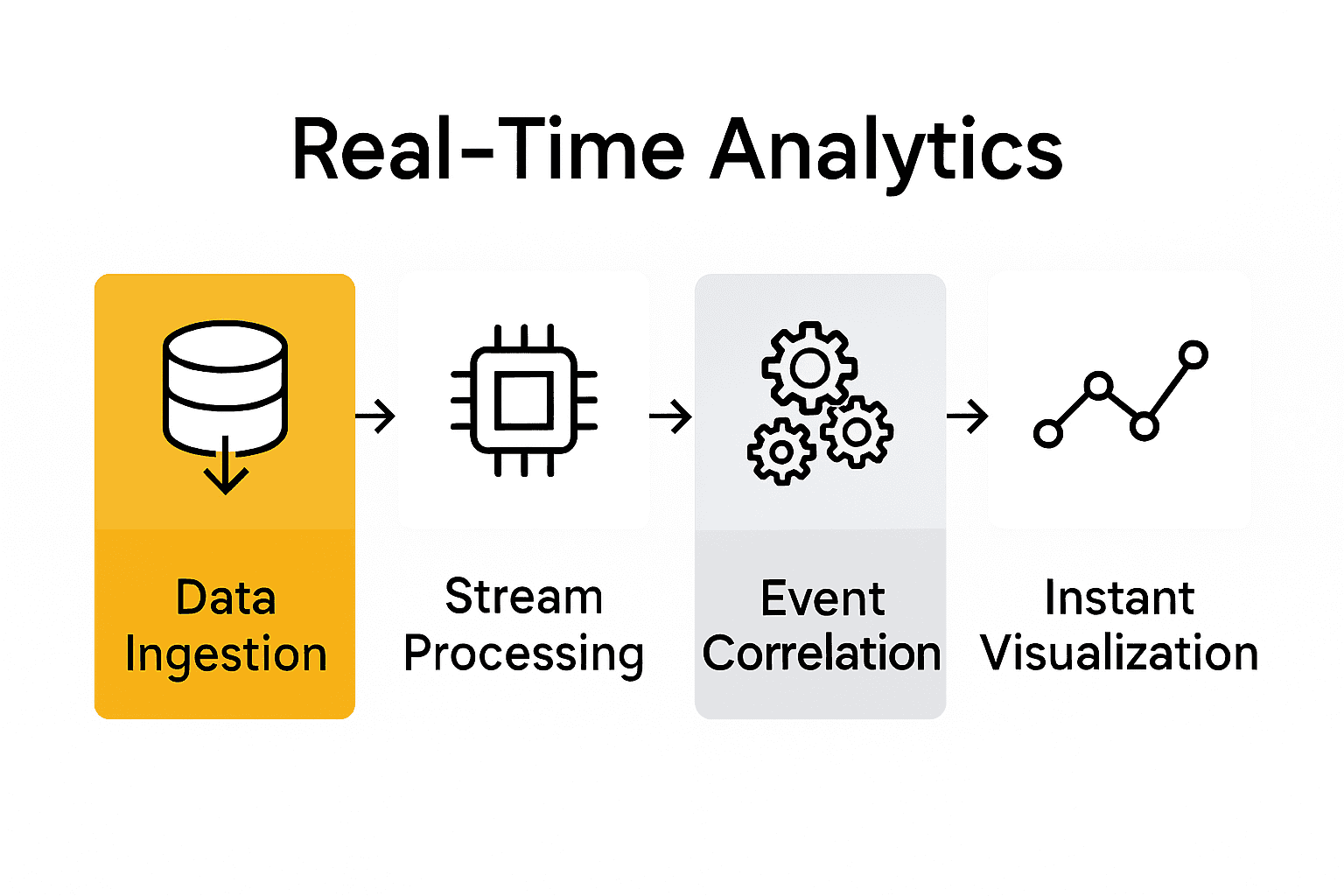
The core operational mechanics of real-time analytics platforms typically involve several critical stages:
- Data Ingestion: Capturing incoming data streams from multiple sources
- Stream Processing: Analyzing and filtering data in near-instantaneous timeframes
- Event Correlation: Identifying patterns and relationships within streaming data
- Instant Visualization: Rendering actionable insights through dynamic dashboards
Additionally, advanced platforms like X-CEP, discussed in another arXiv research, introduce knowledge-infused complex event processing frameworks that enhance traditional analytics capabilities. Understanding Integrating Analytics Tools provides further insights into how these sophisticated systems can be seamlessly integrated into existing technological infrastructures, enabling businesses to unlock unprecedented levels of real-time operational intelligence.
Key Features and Benefits for Marketers
Real-time analytics has revolutionized digital marketing by providing marketers with unprecedented insights into user behavior and campaign performance. These sophisticated platforms transform raw data into strategic intelligence, enabling businesses to make rapid, informed decisions that directly impact their bottom line.
According to Wikipedia's path analysis research, marketers can now deeply understand user behavior paths on websites, tracking intricate user journeys with remarkable precision. This granular understanding allows for hyper-targeted marketing strategies that respond dynamically to user interactions in real-time.
Key benefits for marketers include:
- Instant Performance Tracking: Monitor campaign effectiveness the moment users interact
- User Behavior Insights: Understand complex navigation patterns and engagement metrics
- Personalization Opportunities: Adapt content and experiences based on real-time user data
- Conversion Rate Optimization: Identify and eliminate friction points immediately

Marketers seeking to leverage these powerful insights can benefit from understanding emerging personalization trends. Personalization in Digital Marketing highlights how real-time analytics enables businesses to create increasingly sophisticated, adaptive marketing experiences that resonate with individual user preferences and behaviors.
Risks, Limitations, and Common Pitfalls
Real-time analytics, while powerful, is not without significant challenges that can compromise data integrity, performance, and strategic decision-making. Marketers and technical teams must navigate a complex landscape of potential technical and ethical obstacles to effectively leverage these sophisticated platforms.
Research from MDPI highlights critical challenges in implementing real-time analytics monitoring solutions, particularly concerning data privacy and sentiment analysis complexities. These limitations can create substantial risks for organizations if not carefully managed and strategically approached.
Common pitfalls in real-time analytics include:
- Data Overload: Excessive information leading to analysis paralysis
- Privacy Concerns: Potential breaches of user data and consent boundaries
- Performance Overhead: Processing demands that can slow website performance
- False Positive Insights: Misinterpreting complex data streams
Additionally, arXiv research underscores the significant challenges in real-time anomaly detection, especially when handling large-scale data systems. Understanding these limitations is crucial for businesses to implement robust A/B Testing strategies that mitigate potential risks and maximize analytical effectiveness.
Unlock Real-Time Insights to Drive Smarter Marketing Decisions
Navigating the complexities of real-time website analytics can be overwhelming. The challenges of instant data processing, understanding user behavior instantly, and avoiding data overload are real obstacles that marketers and growth hackers face daily. This guide highlights how real-time analytics empowers you to track performance instantly, personalize user experiences, and optimize conversions without the usual technical headaches.
Stellar offers a streamlined solution specifically designed for marketers looking to harness the power of real-time data. With its lightweight script that minimizes website impact, a no-code visual editor, and advanced goal tracking, Stellar transforms complex analytics into actionable insights you can apply immediately. Discover how our A/B Testing Tool, combined with real-time data, lets you experiment faster and smarter without waiting for delayed reports.
Elevate your marketing by integrating real-time analytics into your strategy today.
Ready to experience the fastest, easiest way to turn real-time analytics into growth? Visit Stellar now to start your free plan and unlock powerful Advanced Goal Tracking and Dynamic Keyword Insertion features built for marketers who demand results today.
Frequently Asked Questions
What is real-time website analytics?
Real-time website analytics is a method of tracking and visualizing website data instantly as user interactions occur, providing immediate insights into user behavior, performance metrics, and engagement patterns.
How do real-time analytics platforms function?
Real-time analytics platforms capture, process, and interpret data streams through stages such as data ingestion, stream processing, event correlation, and instant visualization, allowing for quick decision-making based on current user interactions.
What are the key benefits of using real-time analytics for marketers?
The key benefits include instant performance tracking, deeper insights into user behavior, personalization opportunities based on real-time data, and the ability to optimize conversion rates by identifying and addressing friction points immediately.
What challenges are associated with implementing real-time analytics?
Common challenges include data overload, privacy concerns related to user data, performance overhead affecting website speed, and the risk of misinterpreting insights from complex data streams.
Recommended
Published: 11/19/2025