
Agile Marketing Experimentation: Complete Guide
Most businesses still plan campaigns months in advance, yet over 80 percent of successful marketers now use continuous testing to guide their strategy. The shift toward agile marketing experimentation is changing how brands react to a rapidly evolving market. By embracing real-time data and quick adjustments, companies learn what really works with their audience. This article uncovers the core principles behind agile marketing experimentation and shows how these methods power smarter, faster decision making for teams ready to outpace the competition.
Table of Contents
- Defining Agile Marketing Experimentation Principles
- Types Of Experiments In Agile Marketing
- Step-By-Step Agile Experimentation Process
- Real-World Applications And Use Cases
- Common Pitfalls And How To Avoid Them
Key Takeaways
| Point | Details |
|---|---|
| Agile Marketing Principles | Focus on rapid iteration, data-driven insights, and continuous learning to adapt to consumer behavior effectively. |
| Types of Experiments | Implement diverse methodologies such as A/B, multivariate, and sequential testing to validate marketing hypotheses. |
| Experimentation Process | Utilize a systematic approach comprising hypothesis formation, experimental design, implementation, data analysis, and iteration. |
 |
| Common Pitfalls | Avoid inadequate experimental design and confirmation bias by ensuring robust planning and fostering a culture of continuous learning. |
|
| Common Pitfalls | Avoid inadequate experimental design and confirmation bias by ensuring robust planning and fostering a culture of continuous learning. |
Defining Agile Marketing Experimentation Principles
Agile marketing experimentation represents a dynamic, iterative approach to strategic marketing that prioritizes rapid learning, adaptability, and data-driven decision making. At its core, this methodology transforms traditional marketing practices by embracing continuous testing, real-time insights, and flexible strategy development. Marketing experimentation shifts from static campaign planning to a more responsive, nimble framework that can quickly adjust based on emerging consumer behaviors and market signals.
According to research from Springer, agile marketing principles fundamentally revolve around three critical dimensions: iterative development, cross-functional collaboration, and unwavering customer-centricity. By examining how digital platforms like Spotahome have implemented these strategies, we can understand how businesses drive digital transformation through adaptive marketing techniques. The key principles include:
- Rapid Iteration: Developing and testing marketing hypotheses quickly
- Data-Driven Insights: Using real-time analytics to inform strategy
- Collaborative Approach: Breaking down silos between marketing teams and other departments
- Continuous Learning: Treating each experiment as an opportunity to gain deeper consumer understanding
Understanding the Marketing Experimentation Process becomes crucial in translating these principles into actionable strategies. By leveraging neurobehavioral research and cognitive synchronization techniques, marketers can develop more nuanced, emotionally intelligent experiments that resonate with target audiences. This approach moves beyond traditional demographic targeting, instead focusing on understanding the deeper psychological triggers that influence consumer behavior and decision-making processes.
Types of Experiments in Agile Marketing
Agile marketing experimentation encompasses a diverse range of testing methodologies designed to validate hypotheses, optimize strategies, and drive data-driven decision making. Experimental approaches in marketing have evolved from traditional linear testing to more sophisticated, adaptive techniques that provide deeper insights into consumer behavior and campaign performance.
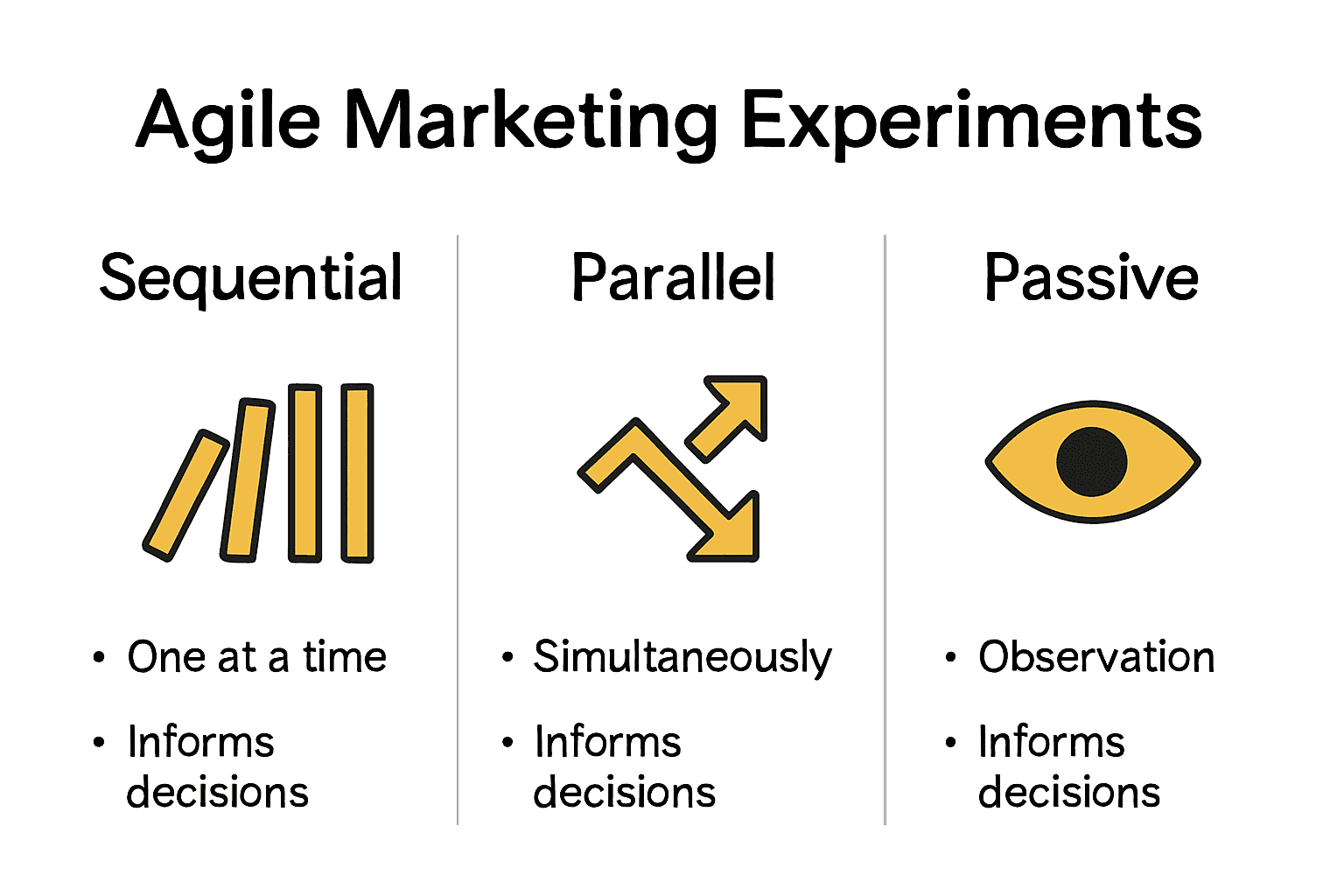
According to research from Stanford's Technology Ventures Program, there are three fundamental types of marketing experiments: Sequential, Parallel, and Passive. Sequential experiments involve linear, step-by-step testing where each experiment builds upon previous findings. Parallel experiments explore multiple marketing hypotheses simultaneously, allowing teams to compare different strategies in real-time. Passive experiments uniquely enable customers to demonstrate their preferences without direct intervention, providing organic insights into consumer decision-making processes.
The experimental landscape in agile marketing is further nuanced by different testing strategies:
- A/B Testing: Comparing two variations of a marketing element to determine which performs better
- Multivariate Testing: Analyzing multiple variables simultaneously to understand complex interactions
- Split URL Testing: Evaluating entirely different webpage designs or layouts
- Multi-page Funnel Testing: Examining user experience across multiple stages of the customer journey
Content Experiments for Marketers: Complete Guide offers deeper insights into implementing these strategies effectively. From ResearchGate, we understand that these experiments are crucial for validating business models, reducing market uncertainties, and creating more responsive marketing strategies that can quickly adapt to changing consumer preferences.
Step-by-Step Agile Experimentation Process
Agile marketing experimentation transforms traditional marketing approaches by introducing a systematic, iterative process that embraces continuous learning and rapid adaptation. Unlike conventional marketing strategies, this approach prioritizes data-driven decision-making and flexible methodology that can quickly pivot based on emerging insights.
According to research from Wharton Faculty, adaptive experimentation represents a rigorous and multifaceted approach to marketing research. The process involves designing experiments that systematically test various marketing strategies, using results from each round to inform subsequent tests and create a continuous loop of learning and optimization.
The comprehensive agile experimentation process typically involves these key stages:
-
Hypothesis Formation
- Identify specific marketing challenges or opportunities
- Develop clear, measurable hypotheses
- Determine potential impact and feasibility
-
Experimental Design
- Select appropriate experimental methodology
- Define control and variable groups
- Establish precise measurement criteria
-
Implementation
- Execute the experiment with minimal disruption
- Collect real-time data
- Maintain strict experimental protocols
-
Data Analysis
- Analyze statistical significance
- Interpret results against original hypothesis
- Identify actionable insights
-
Iteration and Optimization
- Implement successful strategies
- Refine unsuccessful approaches
- Continuously learn and adapt
Simplifying Experimentation Process for Optimal Results provides additional insights into creating robust experimental frameworks. By leveraging statistical designs from causal marketing research, marketers can control external variables, measure complex interactions, and enhance the overall efficiency of their experimental strategies.
Real-World Applications and Use Cases
Agile marketing experimentation transcends theoretical concepts, delivering tangible business transformations across diverse industries. By embracing iterative, data-driven approaches, organizations can rapidly adapt their marketing strategies to meet evolving customer needs and market dynamics.
Research from Springer provides a compelling case study of Spotahome, a digital platform that exemplifies successful Agile Marketing implementation. The company leveraged cross-functional collaboration and iterative development to drive digital transformation, demonstrating how Agile principles can revolutionize marketing effectiveness by prioritizing customer feedback and rapid adaptation.
Real-world applications of Agile marketing experimentation span multiple domains:
-
E-commerce Optimization
- Continuous landing page testing
- Dynamic pricing strategies
- Personalized product recommendations
-
SaaS Product Marketing
- Onboarding flow improvements
- Feature prioritization
- User engagement experiments
-
Content Marketing
- Headline and copy variations
- Email campaign optimization
- Audience segmentation strategies
-
Digital Advertising
- Ad creative testing
- Targeting refinement
- Channel performance analysis
Understanding How to Use Test Data Effectively provides additional insights into interpreting experimental results. As research from Springer's industry-academia collaboration study demonstrates, Agile methodologies can bridge innovation gaps by facilitating rapid adaptation and collaborative learning across organizational boundaries.
Common Pitfalls and How to Avoid Them
Agile marketing experimentation demands precision and strategic thinking to avoid common mistakes that can derail innovation and waste valuable resources. While the approach promises transformative insights, marketers must navigate potential pitfalls with careful planning and methodical execution.
According to research from Stanford's Technology Ventures Program, one of the most critical challenges is selecting the appropriate experimentation method. Eisenhardt's research emphasizes that misalignment between the chosen experimental approach and market conditions can lead to ineffective strategies and potential failure.
The most prevalent pitfalls in agile marketing experimentation include:
-
Inadequate Experimental Design
- Poorly defined hypotheses
- Insufficient sample sizes
- Lack of clear control groups
-
Confirmation Bias
- Interpreting data to support preexisting beliefs
- Ignoring contradictory evidence
- Selective data analysis
-
Statistical Misinterpretation
- Mistaking correlation for causation
- Overlooking statistical significance
- Drawing premature conclusions
-
Resource Misallocation
- Pursuing experiments with minimal potential impact
- Failing to prioritize high-value testing opportunities
- Insufficient budget or time allocation
-
Lack of Continuous Learning
- Treating experiments as one-time events
- Not integrating insights across marketing initiatives
- Failing to establish a culture of experimentation
Digital Marketing Mistakes: Complete Expert Guide offers additional insights into avoiding experimental errors. As research from Wharton Faculty highlights, successful experimentation requires adaptive approaches that carefully integrate research and action, ensuring meaningful and actionable insights that drive strategic marketing decisions.
Unlock the Power of Agile Marketing Experimentation with Stellar
Agile marketing experimentation demands rapid iteration, precise data analysis, and seamless collaboration to transform insights into results. If you are struggling with complex experiments, slow implementation, or unclear outcomes, Stellar offers the solution you need to execute effective tests quickly and confidently. Our platform is built for marketers and growth hackers who want to embrace A/B testing, real-time analytics, and dynamic keyword insertion without the headache of traditional tools.
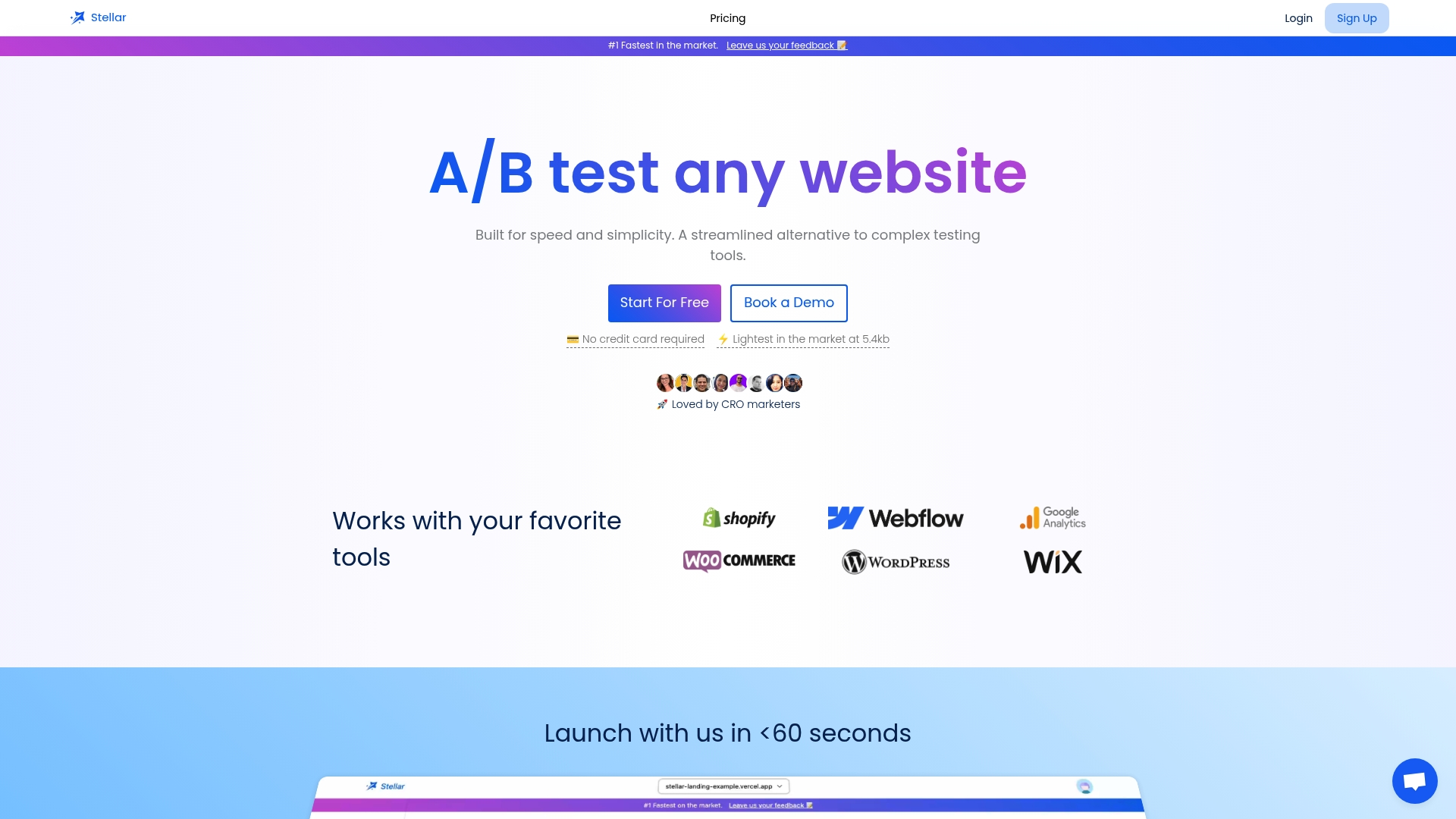
Take control of your marketing experiments today by trying Stellar, the fastest and most lightweight A/B testing tool designed especially for small to medium-sized businesses. Experience the ease of our no-code visual editor and advanced goal tracking to continuously learn and optimize your campaigns just like the agile methodology you rely on. Visit our landing page to get started and explore guides like Understanding the Marketing Experimentation Process and Content Experiments for Marketers: Complete Guide to elevate your experimentation strategy now.
Frequently Asked Questions
What is agile marketing experimentation?
Agile marketing experimentation is a dynamic, iterative approach that emphasizes rapid learning, adaptability, and data-driven decision making, transitioning from traditional marketing practices to a more responsive framework that can quickly adjust strategies based on consumer behaviors and market signals.
What are the main principles of agile marketing experimentation?
The main principles include rapid iteration, data-driven insights, collaborative approaches, and continuous learning, which collectively enable marketers to develop strategies that resonate better with target audiences and adapt swiftly to changes.
What types of experiments are commonly used in agile marketing?
Common types of experiments in agile marketing include sequential experiments, parallel experiments, and passive experiments, along with testing methodologies such as A/B testing, multivariate testing, and split URL testing to validate marketing strategies and optimize performance.
How can I avoid common pitfalls in agile marketing experimentation?
To avoid pitfalls, it’s crucial to ensure adequate experimental design with clearly defined hypotheses, mitigate confirmation bias by remaining objective during data interpretation, prevent statistical misinterpretation, allocate resources wisely, and foster a culture of continuous learning by treating experiments as iterative processes rather than one-time events.
Recommended
Published: 11/18/2025