
How to Analyze Test Results for Data-Driven Marketing Success
Over 80 percent of american businesses rely on A/B testing to optimize their marketing campaigns. Yet getting trustworthy results is not as simple as running experiments and reading numbers. Without careful setup and analysis, even the most advanced tests can lead to costly mistakes. This guide lays out a proven step by step process that helps you measure, collect, and interpret your test data so you can make smarter decisions that truly move the needle.
Table of Contents
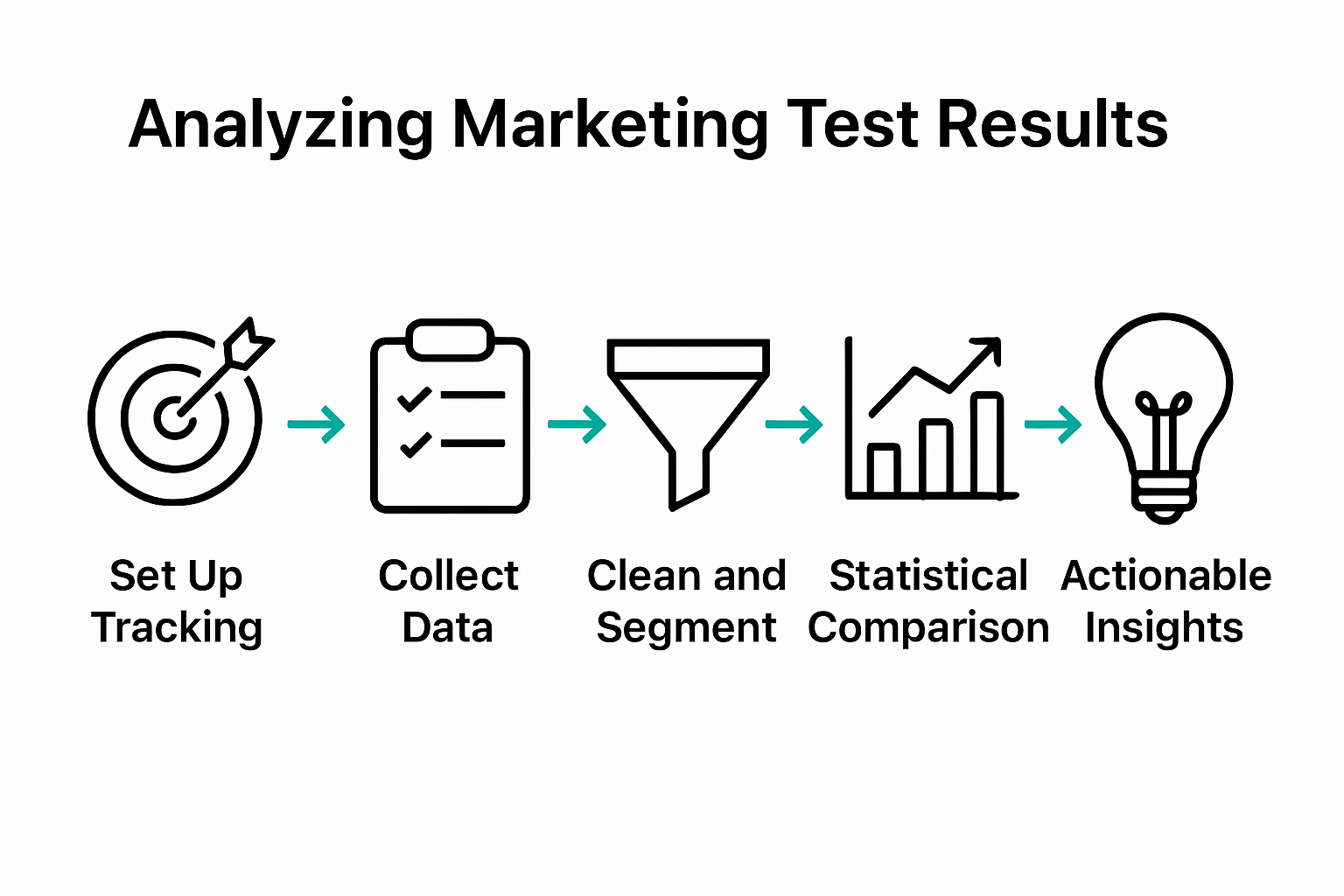
- Step 1: Set Up Test Tracking For Clear Goal Measurement
- Step 2: Collect Relevant Data From Your A/B Testing Tool
- Step 3: Clean And Segment Your Test Results Effectively
- Step 4: Compare Variant Performance Using Statistical Methods
- Step 5: Validate Findings And Prepare Actionable Insights
Quick Summary
| Primary Insight | Explanation |
|---|---|
| 1. Define clear conversion goals | Establish specific conversion goals aligned with marketing objectives to track performance effectively. |
| 2. Implement robust data collection methods | Collect both qualitative and quantitative data to gain a comprehensive view of user behavior and test variant performance. |
| 3. Clean and segment data rigorously | Use advanced techniques to clean data and segment results to uncover meaningful performance differences. |
| 4. Utilize solid statistical analysis | Apply statistical methods like p-values and confidence intervals to identify significant differences between A/B test variants. |
| 5. Validate insights for actionable results | Cross-reference findings with performance indicators to generate reliable recommendations that inform marketing strategies. |
Step 1: Set up test tracking for clear goal measurement
Analyzing marketing test results begins with establishing precise goal tracking mechanisms that transform raw data into actionable insights. Effective goal measurement requires strategic planning and careful implementation of tracking parameters that capture meaningful performance indicators.
To set up robust test tracking, start by defining specific conversion goals that align directly with your marketing objectives. Conversion tracking allows you to monitor key performance metrics like click-through rates, sign-ups, purchases, or engagement levels. Research from Brown University's user testing guide suggests breaking down complex goals into measurable components that can be systematically evaluated across different test variations. This approach ensures you capture granular data points that reveal nuanced user behaviors.
When configuring your tracking parameters, focus on creating clear attribution paths that link specific user actions to your test variants. Implement tracking pixels, event tags, and unique identifiers that can trace user interactions from initial touchpoint through final conversion. By establishing these precise tracking mechanisms, you transform A/B testing from a guessing game into a data-driven decision-making process that provides genuine strategic insights into user preferences and behavior patterns.
Warning: Incomplete or poorly configured tracking can lead to misleading test results that compromise your marketing strategy. Always double-check your tracking setup before launching any experiment.
Step 2: Collect relevant data from your A/B testing tool
Collecting robust data is the cornerstone of meaningful A/B test analysis. Your goal is to gather comprehensive insights that reveal true user behavior and performance differences between test variants.
Research from MIT highlights the critical importance of systematic data collection strategies. When gathering information, focus on capturing actionable insights from your A/B testing experiments. Start by identifying key performance indicators that directly align with your marketing objectives. These might include conversion rates, engagement metrics, click through rates, or specific user interaction patterns. Modern testing tools offer multiple data collection methods including tracking pixel integration, event logging, and comprehensive user journey mapping.
Prioritize collecting both quantitative and qualitative data points to ensure a holistic understanding of test performance. Quantitative metrics provide numerical evidence of performance variations, while qualitative insights reveal the underlying user motivations and experiences. Implement tracking across multiple dimensions such as user segments, device types, and traffic sources to uncover nuanced patterns that might impact your test results.
Warning: Always validate your data collection methods to prevent sampling bias or incomplete tracking that could compromise your test analysis. Cross reference multiple data sources and ensure your tracking setup captures comprehensive user interactions.
Step 3: Clean and segment your test results effectively
Cleaning and segmenting test results transforms raw data into meaningful insights that drive strategic marketing decisions. This critical step ensures your analysis is precise, reliable, and actionable.

Advanced research suggests innovative approaches to correcting data inconsistencies that go beyond traditional cleaning methods. Implement rigorous data validation techniques that eliminate outliers, normalize metrics, and account for potential sampling biases. Focus on segmenting your results across key dimensions such as user demographics, traffic sources, device types, and behavioral characteristics. This granular approach allows you to uncover nuanced performance variations that might be obscured in aggregate data.
When segmenting your test results, prioritize statistical significance and practical relevance. Create distinct user segments that reveal meaningful behavioral patterns and performance differences. Look for consistent trends across multiple segments rather than relying on isolated data points. Collaborative analysis frameworks recommend cross referencing multiple experiment results to enhance the reliability of your insights and minimize potential analysis errors.
Warning: Oversimplification or inappropriate segmentation can lead to misleading conclusions. Always maintain a balanced approach that considers both statistical rigor and practical marketing implications.
Step 4: Compare variant performance using statistical methods
Comparing A/B test variants requires precision and sophisticated statistical techniques that transform raw data into meaningful performance insights. Your goal is to move beyond surface level comparisons and uncover statistically significant differences between test variants.
Advanced statistical methodologies offer powerful techniques for maximizing the analytical power of your experiments. Start by calculating key statistical measures including p values, confidence intervals, and effect sizes that provide robust evidence of performance variations. Continuous monitoring techniques allow you to track variant performance dynamically without compromising the statistical validity of your analysis. Focus on comparing metrics across multiple dimensions such as conversion rates, engagement levels, and user interaction patterns.
When interpreting statistical results, consider both statistical significance and practical significance. A mathematically significant difference might not always translate to meaningful business impact. Look for consistent performance patterns across different user segments and consider the potential practical implications of your findings. Implement rigorous statistical controls that account for potential sampling biases and random variations.
Warning: Misinterpreting statistical results can lead to misguided marketing decisions. Always consult with a statistical expert or use validated statistical analysis tools to ensure the accuracy of your comparative analysis.
Step 5: Validate findings and prepare actionable insights
Validating A/B test findings requires a systematic approach that transforms raw data into strategic marketing recommendations. Your ultimate goal is to convert statistical results into meaningful business actions that drive measurable improvements.
Rigorous methods for optimizing product choices emphasize the importance of comprehensive validation techniques. Begin by cross referencing your statistical results against multiple performance indicators and user segments. Systematic evaluation processes recommend analyzing both quantitative metrics and qualitative observations to ensure a holistic understanding of your test outcomes. Create a structured framework that maps test findings to specific marketing strategies and potential implementation actions.
Prepare insights by developing clear recommendations that connect statistical evidence to practical business implications. Translate complex statistical data into straightforward narratives that highlight potential improvements, potential risks, and recommended next steps. Prioritize insights that demonstrate meaningful impact on key performance indicators such as conversion rates, user engagement, or revenue generation. Consider creating visual representations like analytics dashboards to communicate your findings more effectively to stakeholders.
Warning: Actionable insights require more than numbers. Context and strategic interpretation are crucial for transforming test results into meaningful marketing decisions.
Unlock True Marketing Growth with Precise Test Analysis
Struggling to make sense of your A/B test data and translate it into clear business wins The article highlights essential challenges like setting up reliable goal tracking, cleaning and segmenting results, and validating findings to avoid costly mistakes. You need a solution that simplifies these processes while offering powerful analytics that deliver actionable insights without overwhelming complexity.

Experience how Stellar transforms your marketing experiments with its lightweight, no-code visual editor and advanced goal tracking capabilities. Designed specifically for marketers and growth hackers, Stellar helps you capture detailed metrics and uncover user behavior across segments so you can make confident decisions fast. Don’t waste another test wondering if you tracked your results right start leveraging real-time analytics and actionable insights today by visiting https://gostellar.app and unlocking smarter A/B testing tailored for your business.
Frequently Asked Questions
How do I set up test tracking for my marketing goals?
To set up test tracking, define specific conversion goals that align with your marketing objectives. Implement tracking methods like pixels and event tags to monitor key performance metrics such as click-through rates or purchases.
What types of data should I collect from my A/B testing?
Collect both quantitative data, like conversion rates, and qualitative insights, such as user feedback. This dual approach helps you understand not just what users do, but why they behave that way, leading to more informed decisions.
How should I clean and segment my test results?
Focus on eliminating outliers and normalizing metrics to ensure accuracy in your data. Segment your results by user demographics, device types, or traffic sources to uncover performance differences that may be obscured in the overall data.
What statistical methods are best for comparing A/B test variants?
Utilize statistical measures such as p values and confidence intervals to compare performance between variants. This will help you identify statistically significant differences, enabling more reliable marketing decisions.
How can I validate my A/B test findings effectively?
Validate your findings by cross-referencing your results with various performance indicators and user segments. Create a framework that maps these test outcomes to actionable marketing strategies for future campaigns.
What should I do if my test results don’t show clear insights?
If your results lack clarity, reevaluate your tracking setup and data collection methods to ensure completeness. Consider running additional tests or altering parameters to refine your insights based on observed user behavior.
Recommended
Published: 12/2/2025