
Iterative Experimentation Process: Driving Rapid Growth
Most American companies waste countless marketing dollars without ever uncovering what actually drives results. Testing tactics the same old way delivers little insight in a landscape where trends change at lightning speed. Iterative experimentation is transforming the way teams collect data and adapt, with organizations reporting up to a 20 percent increase in key digital metrics when switching to this agile approach. Discover how this scientific mindset helps American brands learn faster and outperform their competition.
Table of Contents
- Defining Iterative Experimentation In Marketing
- Types Of Iterative Testing Methodologies
- Core Steps In The Experimentation Cycle
- Advantages For Growth And Conversion Optimization
- Common Pitfalls And How To Avoid Them
Key Takeaways
| Point | Details |
|---|---|
| Iterative Experimentation | This strategic approach allows marketers to test, learn, and refine tactics quickly through controlled experiments. |
| Testing Methodologies | Employ methodologies like A/B testing and multivariate testing to gather data-driven insights for better decision-making. |
| Continuous Learning | Establish a culture of documenting and sharing insights to inform future strategies and enhance agility. |
| Avoiding Pitfalls | Be mindful of statistical significance and contextual factors to ensure experimental integrity and valid conclusions. |
Defining Iterative Experimentation in Marketing
Iterative experimentation represents a strategic approach where marketers systematically test, learn, and refine their tactics through rapid, measured interventions. Adaptive experimentation methods enable organizations to validate hypotheses quickly, reducing the risks associated with large-scale marketing investments.
At its core, iterative experimentation follows a cyclical process of hypothesis generation, targeted testing, data collection, and insights extraction. Unlike traditional linear marketing strategies, this approach allows teams to make incremental adjustments based on real-world performance data. Rapid testing becomes the primary mechanism for understanding customer behavior, preferences, and potential conversion opportunities.
The methodology draws significant inspiration from lean startup principles, emphasizing continuous learning and minimal viable experiments. Marketing teams implement small-scale tests across various channels - from email subject lines to landing page designs - to gather statistically significant insights without committing extensive resources. Lean startup-style innovation suggests that these micro-experiments can dramatically accelerate growth by providing immediate feedback loops.
Pro Tip: Start Small, Scale Smart: Begin your iterative experimentation journey by selecting one marketing channel and running controlled tests with clear, measurable objectives. Track your results meticulously and use data-driven insights to progressively expand your experimental approach across additional marketing initiatives.
Types of Iterative Testing Methodologies
Iterative testing methodologies provide marketers with structured approaches to validate hypotheses and optimize performance across digital channels. A/B testing represents the foundational method, involving direct comparisons between two distinct versions of a marketing asset to determine which generates superior results. This technique allows teams to make data-driven decisions by systematically measuring variations in user engagement, conversion rates, and overall campaign effectiveness.
Beyond traditional A/B testing, multivariate testing emerges as a more complex methodology for sophisticated marketers. Multivariate landing page optimization enables simultaneous testing of multiple page elements, providing deeper insights into how different combinations of design, copy, and interactive components influence user behavior. This approach allows marketers to understand intricate interactions between various page elements rather than simply comparing two complete versions.
Other prominent iterative testing methodologies include split testing, sequential testing, and adaptive testing. Split testing mirrors A/B testing but can involve more than two variants, while sequential testing allows for continuous evaluation and refinement of experiments over time. Adaptive testing represents the most dynamic approach, dynamically adjusting experiment parameters based on emerging data patterns and real-time performance metrics.
Pro Tip: Experiment Strategically: Focus on testing one variable at a time to ensure clear, actionable insights. Maintain statistically significant sample sizes and establish precise success metrics before launching any iterative testing initiative.
Here's a comparison of common iterative testing methodologies to clarify their unique characteristics:
| Methodology | Main Purpose | Complexity Level | Typical Business Use Case |
|---|---|---|---|
| A/B Testing | Directly compare two variants | Low | Email subject line optimization |
| Multivariate Test | Analyze multiple elements at once | High | Landing page layout improvements |
| Split Testing | Test several versions of a campaign | Medium | Different ad creatives or messaging |
| Sequential Test | Evaluate and refine over time | Medium | Ongoing content strategy adjustments |
| Adaptive Testing | Update experiment as data emerges | High | Personalized website experience tuning |
Core Steps in the Experimentation Cycle
The experimentation cycle represents a strategic framework for transforming marketing hypotheses into validated insights through systematic testing. Hypothesis formulation serves as the critical first stage, where marketers develop clear, measurable predictions about potential audience behaviors, campaign performance, or strategic interventions.

Once a hypothesis is established, the next phase involves designing a precise experimental protocol that isolates specific variables and establishes robust measurement criteria. This involves creating controlled test scenarios, defining precise success metrics, and determining statistically significant sample sizes. Lean startup-style innovation emphasizes the importance of creating minimal viable experiments that can quickly validate or invalidate core assumptions with minimal resource investment.
The implementation and analysis stages represent the most dynamic components of the experimentation cycle. During implementation, marketers execute their designed experiments across selected channels, carefully monitoring real-time performance data. Analysis involves rigorous statistical evaluation, comparing experimental results against established baseline metrics and determining the statistical significance of observed variations. This phase requires advanced data interpretation skills, helping teams distinguish between meaningful insights and random statistical noise.
Pro Tip: Insight Extraction: Always document your experimental findings comprehensively, including both successful and unsuccessful tests. Create a centralized knowledge repository that allows your team to build institutional learning and prevent repeated experiments in future marketing initiatives.
Advantages for Growth and Conversion Optimization
Iterative experimentation offers transformative benefits for organizations seeking data-driven growth strategies. Quantitative research demonstrates that systematic testing can generate remarkable performance improvements, with some studies revealing up to a 20% enhancement in key performance metrics across digital platforms.
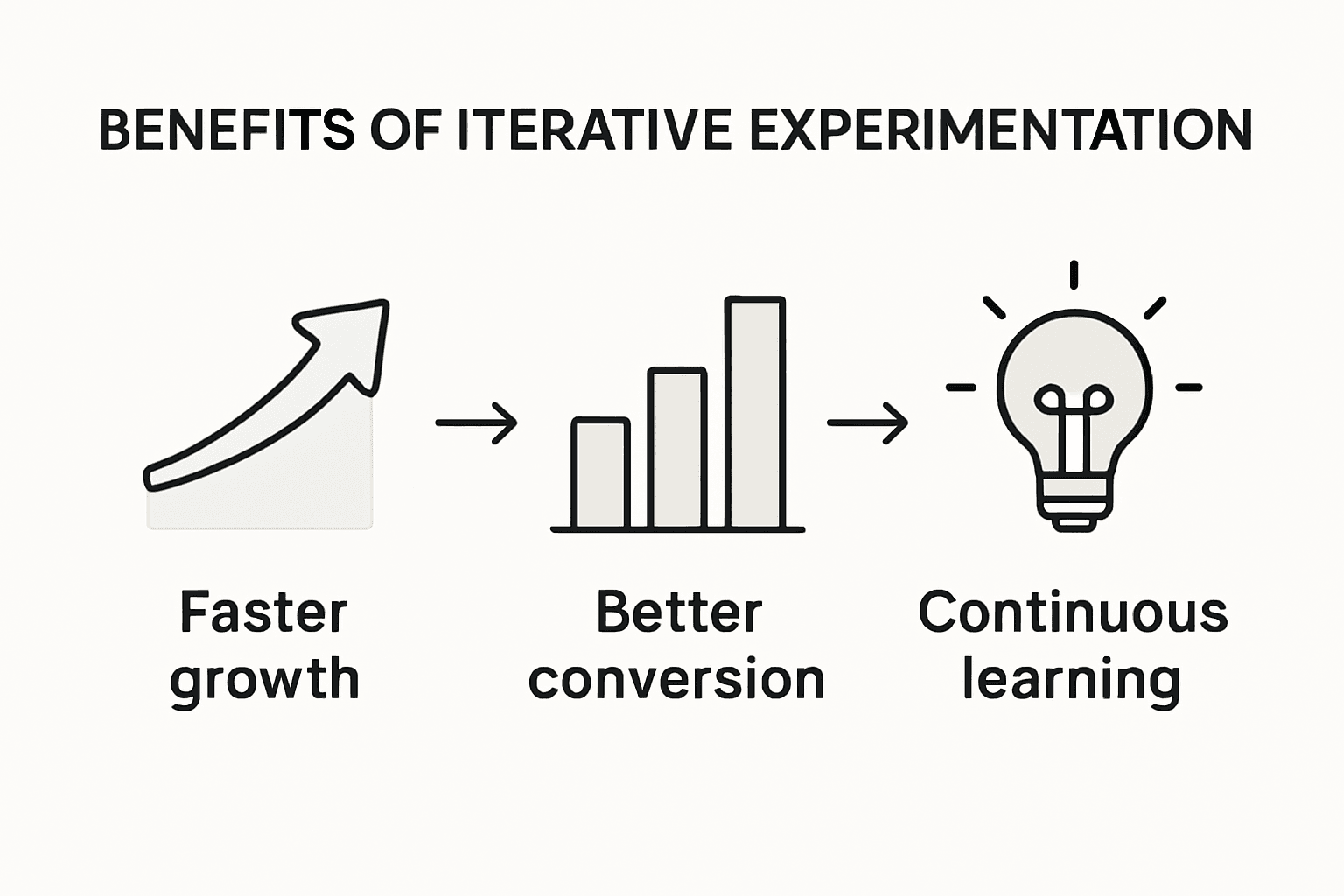
Conversion optimization emerges as a primary advantage of iterative experimentation, enabling marketers to incrementally refine user experiences with precision. By continuously testing and analyzing small variations, teams can identify subtle yet impactful changes that dramatically improve engagement rates, reduce friction in customer journeys, and ultimately drive higher conversion percentages. Early and iterative testing methods allow organizations to rapidly adapt creative content based on real-time audience feedback, creating more resonant and effective marketing campaigns.
The strategic value of iterative experimentation extends beyond immediate performance gains. By cultivating a culture of continuous learning and data-driven decision making, organizations develop more agile marketing capabilities. This approach transforms traditional linear marketing processes into dynamic, responsive systems that can quickly pivot strategies based on empirical evidence. The cumulative insights generated through repeated testing build institutional knowledge, allowing teams to develop increasingly sophisticated understanding of their target audiences and market dynamics.
Pro Tip: Continuous Learning: Establish a structured process for documenting and sharing experimental insights across your team, creating a centralized repository of learnings that can inform future marketing strategies and prevent redundant testing efforts.
This table summarizes major advantages that iterative experimentation brings to marketing teams:
| Advantage | Description | Impact on Business |
|---|---|---|
| Faster Learning Cycles | Rapidly test and adapt campaigns | Shortens time to results |
| Enhanced Conversion | Identify small changes that drive big improvements | Higher sales and signups |
| Data-Driven Decisions | Base actions on metrics, not assumptions | More confident investments |
| Knowledge Accumulation | Build a rich understanding of audiences | Smarter long-term strategies |
| Improved Agility | Quickly pivot strategies based on test outcomes | Competitive market response |
Common Pitfalls and How to Avoid Them
Iterative experimentation requires sophisticated planning to avoid critical errors that can invalidate research findings. Competitive interference in online testing represents a significant challenge, where external market actions can dramatically skew experimental results, making it essential for marketers to account for broader contextual factors during their analysis.
Statistical significance emerges as another crucial consideration in experimental design. Many teams fall into the trap of drawing conclusions from insufficient data or misinterpreting noisy responses. Advanced research methodologies suggest implementing robust stratification techniques to improve precision and reduce decision errors. Common pitfalls include premature scaling, inadequate sample sizes, and failing to establish clear baseline metrics before launching experiments.
Technical limitations can further compromise experimental integrity. Marketers must be vigilant about potential biases introduced through improper segmentation, inconsistent tracking mechanisms, or incomplete data collection protocols. Successful experimentation demands a holistic approach that considers audience diversity, platform-specific nuances, and potential confounding variables that might distort experimental outcomes.
Pro Tip: Experimental Rigor: Always document your experimental constraints and potential limitations transparently. Develop a standardized checklist that validates experimental design before implementation, ensuring methodological consistency and reducing the risk of misleading conclusions.
Accelerate Your Marketing Success with Iterative Experimentation
The article highlights the transformative power of iterative experimentation and the challenges marketers face like rapid testing, maintaining statistical rigor, and achieving continuous growth through data-driven decisions. You want to avoid common pitfalls such as inadequate sample sizes or slow feedback loops while unlocking faster learning cycles and enhanced conversion rates. Our A/B Testing Tool is purpose-built to simplify this process. With Stellar's no-code visual editor and lightweight script, you can launch fast, focused experiments that deliver real-time insights without technical complexity.

Ready to boost your marketing agility and optimize conversions through smarter, faster tests Start your journey with Stellar and experience how seamless iterative experimentation can be for small to medium-sized businesses. Explore our platform at https://gostellar.app today and take advantage of tailored pricing plans including a free tier designed for growing teams. Learn more about our powerful features such as Advanced Goal Tracking that help ensure your experiments drive measurable growth. Don't wait to transform your marketing into a data-driven growth engine.
Frequently Asked Questions
What is iterative experimentation in marketing?
Iterative experimentation is a strategic approach where marketers systematically test, learn, and refine their tactics through rapid and measured interventions. It allows for quick hypothesis validation and reduces risks associated with larger marketing investments.
How can I implement iterative experimentation in my marketing strategy?
Begin by selecting one marketing channel and running controlled, small-scale tests with clear objectives. Track your results meticulously and use data-driven insights to progressively expand your experimental approach across various marketing initiatives.
What are the benefits of using A/B testing in iterative experimentation?
A/B testing allows marketers to directly compare two variants of a marketing asset, enabling data-driven decisions. It helps measure variations in user engagement and conversion rates, leading to more effective campaigns.
How can I avoid common pitfalls in iterative experimentation?
Avoid common pitfalls by ensuring adequate sample sizes, establishing clear baseline metrics, and documenting potential experimental limitations. Transparency and structured methodologies are essential to maintain the integrity of your testing efforts.
Recommended
Published: 12/20/2025