
Testing Headlines for Conversion: Boost Results With A/B Experiments
Most american e-commerce teams waste time on headline tests that never move the needle. With so many variables at play, it is easy to get stuck measuring clicks while missing the real conversion wins. The right A/B testing process delivers much more—with studies showing that strong testing strategies can improve sales by over 20 percent. Discover efficient, technical barrier-free headline testing steps that help digital marketers accurately measure and improve what truly matters.
Table of Contents
- Step 1: Define Clear Conversion Goals For Headline Tests
- Step 2: Set Up Headline Variants Using A Visual Editor
- Step 3: Implement Dynamic Keyword Insertion For Personalization
- Step 4: Launch A/B Tests And Monitor Real-Time Analytics
- Step 5: Review Performance And Optimize Winning Headlines
Quick Summary
| Key Insight | Explanation |
|---|---|
| 1. Define Clear Conversion Goals | Establish precise objectives to guide your headline testing and improve performance. |
| 2. Create Headline Variants Easily | Use visual editors to develop multiple headline versions without coding skills. |
| 3. Enable Dynamic Keyword Insertion | Personalize headlines by incorporating specific keywords based on user data. |
| 4. Monitor Real-Time Analytics | Track performance metrics actively to make informed decisions in your tests. |
| 5. Optimize Winning Headlines | Analyze successful variants and refine messaging strategies for continuous improvement. |
Step 1: Define clear conversion goals for headline tests
Defining precise conversion goals transforms headline testing from guesswork into a strategic, data driven process. Your goals determine everything: what you measure, how you analyze results, and ultimately how you improve your marketing performance.
Starting with structured goal setting approaches helps marketers create meaningful, actionable objectives. Think beyond simple metrics like clicks or views. Identify specific, measurable outcomes that directly impact business growth. For headline tests, conversion goals might include increasing signup rates, boosting product page engagement, reducing bounce rates, or improving email list subscriptions.
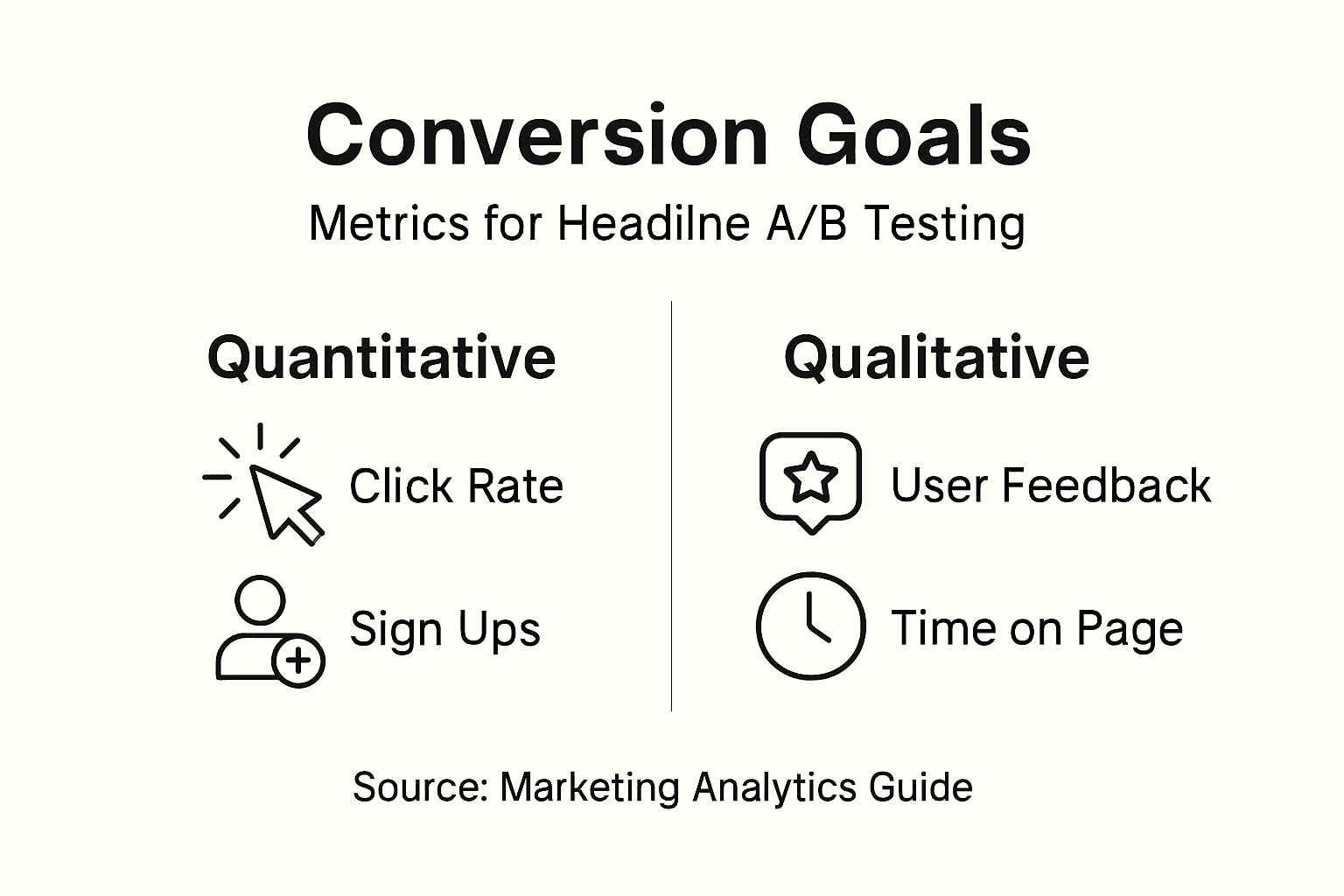
When establishing conversion goals, consider both quantitative and qualitative metrics. Quantitative goals track numerical improvements like conversion percentage, while qualitative goals measure user experience factors such as time spent on page or interaction depth. Blend these approaches to create comprehensive testing strategies that capture nuanced user behaviors.
Here's a comparison of quantitative and qualitative conversion goals marketers can use:
| Goal Type | Example Metric | Business Impact |
|---|---|---|
| Quantitative | Conversion percentage | Measures direct performance |
| Quantitative | Click-through rate | Evaluates user action intent |
| Qualitative | Time spent on page | Assesses engagement quality |
| Qualitative | Depth of interaction | Reveals interest level |
Pro tip: Prioritize conversion goals that align directly with your core business objectives and have clear, measurable impact on revenue or growth.
Step 2: Set up headline variants using a visual editor
A visual editor simplifies the process of creating multiple headline variations for your A/B testing experiment. These intuitive interfaces allow you to generate and customize headline options without requiring complex coding skills or technical expertise.
Marketers can quickly create headline variants through visual interfaces that provide robust styling and formatting tools. Your goal is to develop distinct headline variations that test different emotional triggers, value propositions, or communication approaches. Focus on creating variations that alter key elements like word choice, sentence structure, length, and psychological framing. For instance, you might test a direct headline against a more curiosity driven version or compare a benefit focused approach with a problem solving angle.

When setting up your variants, leverage the visual editor's flexibility to experiment with formatting, font weights, capitalization, and emotional language. Some tools allow you to toggle between visual and code modes, enabling precise customization. Aim to create 3 to 5 distinct headline variations that maintain your core message while presenting unique perspectives that could resonate differently with your target audience.
Consider how different headline variant strategies deliver value:
| Strategy | Distinctive Approach | Potential Audience Effect |
|---|---|---|
| Direct headline | Clear and straightforward | Increases trust and clarity |
| Curiosity-driven version | Promotes intrigue | Boosts engagement rates |
| Benefit-focused approach | Highlights advantages | Appeals to practical needs |
| Problem-solving angle | Addresses pain points | Encourages action |
Pro tip: Ensure each headline variant represents a meaningfully different approach to communicate your core message, rather than making superficial or minimal changes.
Step 3: Implement dynamic keyword insertion for personalization
Dynamic keyword insertion transforms your headline testing strategy by creating highly personalized experiences that speak directly to individual user interests. This advanced technique allows you to automatically customize headline content in real time, making each visitor feel like your message was crafted specifically for them.
Marketers can enhance personalization through dynamic keyword strategies that replace generic placeholders with user specific terms. The process involves implementing special tags within your headline template that dynamically swap in relevant keywords based on user search queries or behavioral data. For example, a headline like "Find the Best Solutions" could automatically adapt to show "Find the Best Marketing Solutions" or "Find the Best Sales Solutions" depending on the user's specific context.
To implement dynamic keyword insertion effectively, focus on creating flexible headline templates that maintain grammatical integrity while allowing meaningful keyword substitution. Leverage AI driven approaches that intelligently select optimal keywords based on user behavior, search history, and contextual signals. This ensures your headlines remain coherent and compelling while delivering a personalized experience that significantly improves engagement and conversion potential.
Pro tip: Create multiple keyword templates with slight variations to maximize the personalization potential and prevent repetitive messaging.
Step 4: Launch A/B tests and monitor real-time analytics
Launching your A/B test marks the critical transition from planning to active experimentation. This phase requires strategic implementation to ensure accurate data collection and meaningful insights that can drive significant conversion improvements.
Marketers can prevent data interference through careful test launching by implementing gradual test ramping and decentralized launch protocols. Start by setting up your test variants with clear tracking parameters, ensuring each headline version receives equal and randomized traffic. Configure your analytics platform to capture granular metrics such as click through rates, time on page, and conversion percentages for each headline variant.
Real time monitoring becomes crucial during the testing phase. Watch for statistically significant performance differences between your headline variants, but avoid making premature decisions. Pay close attention to user engagement signals, tracking how different headlines impact overall visitor behavior. Some variations might show immediate performance gains, while others require more time to demonstrate their true potential. Use integrated analytics tools that provide live insights, enabling you to quickly identify winning variants and promptly address any tracking anomalies or unexpected results.
Pro tip: Set a predetermined sample size and significance threshold before launching to prevent emotional decision making and ensure data driven conclusions.
Step 5: Review performance and optimize winning headlines
Performance review transforms raw A/B testing data into actionable marketing insights that drive meaningful conversion improvements. This crucial phase moves beyond simple data collection to strategic interpretation and refinement of your headline strategies.
Marketers can validate headline performance through statistical analysis that goes beyond surface level metrics. Carefully examine each headline variant using comprehensive performance indicators such as click through rates, conversion percentages, and user engagement depth. Look for statistically significant differences that demonstrate clear audience preferences. Pay special attention to how different headline approaches resonate with specific audience segments, understanding that winning variations might differ based on demographic or behavioral characteristics.
Iterative optimization requires a nuanced approach. When a headline variant proves successful, resist the temptation to simply replicate its exact structure. Instead, analyze the underlying psychological triggers and communication strategies that made it effective. Develop new headline iterations that build upon these insights, testing subtle variations that explore the core messaging components that drove initial success. Remember that audience preferences evolve continuously, so maintaining a cycle of testing, learning, and refining is key to long term conversion optimization.
Pro tip: Always keep a record of previous headline tests to build a cumulative understanding of what resonates with your specific audience over time.
Maximize Your Conversion Rates with Smarter Headline Testing
Struggling to turn headline ideas into measurable growth? This article highlights the key challenges marketers face in defining clear conversion goals, setting up distinct headline variants, personalizing with dynamic keyword insertion, and making data-driven decisions through real-time analytics. If you want to move beyond guesswork and execute A/B tests that truly drive results you must focus on precise goal tracking and effortless experimentation.
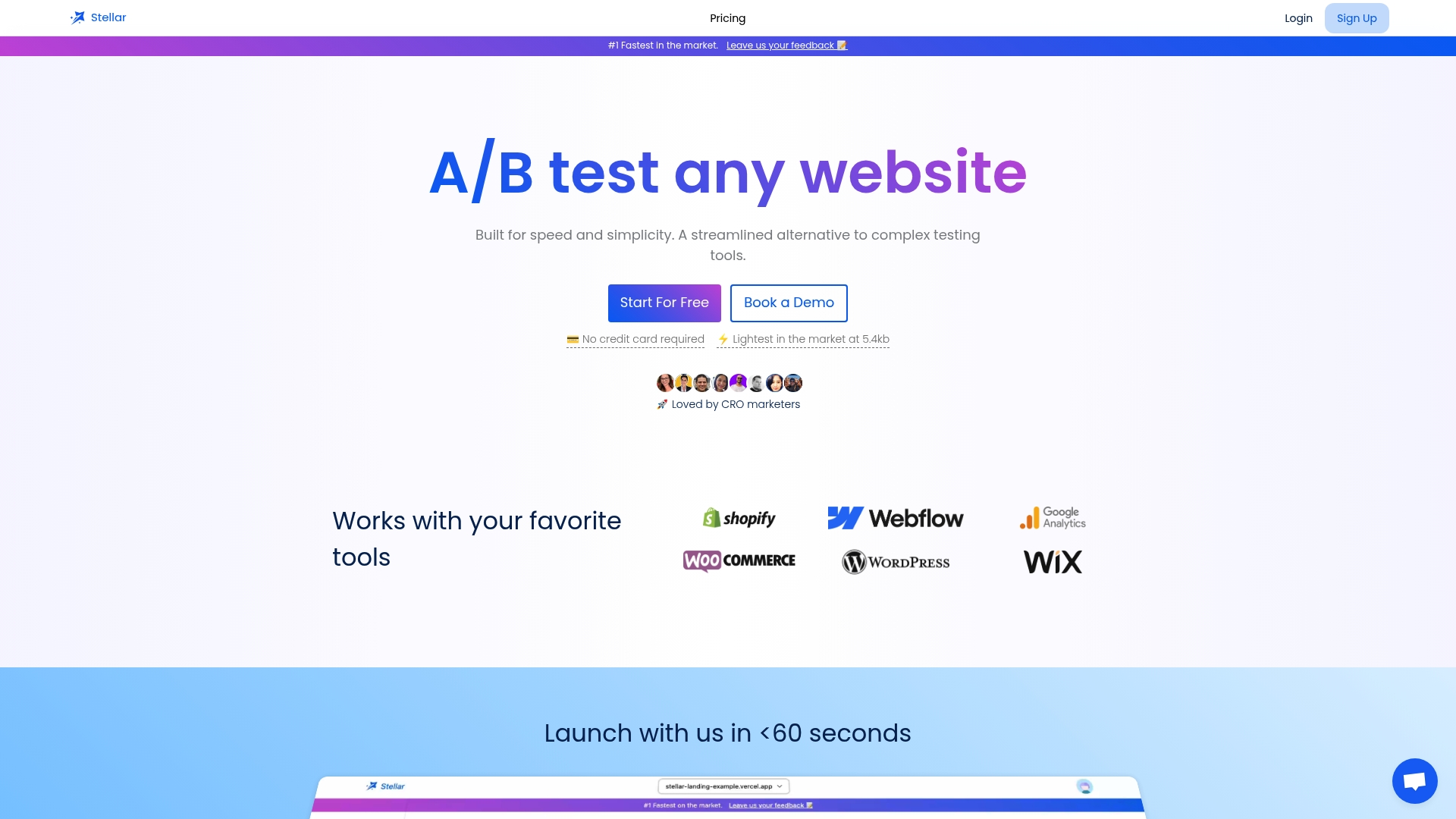
Stellar offers a powerful solution tailored for marketers and growth hackers who need a fast, lightweight, and intuitive platform to test headlines without the technical hassle. With its no-code visual editor, you can create and launch multiple headline variations easily while integrating advanced dynamic keyword insertion techniques to personalize content in real time. Plus, Stellar’s real-time analytics give you instant, actionable insights so you never miss an opportunity to optimize and boost conversions.
Ready to stop guessing and start knowing which headlines convert best Visit Stellar today to streamline your A/B testing workflow and achieve measurable growth with confidence
Frequently Asked Questions
What are effective conversion goals for A/B headline testing?
Defining effective conversion goals involves identifying specific outcomes that directly contribute to business growth. Consider metrics like signup rates or bounce rates, and ensure these goals align with your overall objectives to improve marketing performance.
How can I create headline variants for A/B testing?
To create headline variants, utilize a visual editor to generate multiple options that differ in wording, structure, and emotional appeal. Aim for 3 to 5 distinct headlines that represent unique perspectives while maintaining your core message.
What is dynamic keyword insertion and how does it enhance headline testing?
Dynamic keyword insertion allows you to customize headlines in real time based on individual user interests, making messages more relevant. Implement tags in your templates to swap in user-specific keywords, improving engagement and potentially increasing conversions.
How should I monitor the results of my A/B headline tests?
Monitor your A/B tests by setting up tracking parameters that collect granular data such as click-through rates and time on page. Watch for statistically significant differences but avoid premature conclusions; use real-time analytics to evaluate long-term performance.
What should I focus on during the performance review of my A/B tests?
During the performance review, focus on analyzing statistical differences in engagement and conversion rates among your headline variants. Use this data to identify winning approaches and iterate on successful elements, ensuring continuous optimization of your marketing efforts.
How long should I run A/B tests before drawing conclusions?
It's best to run A/B tests for a predetermined sample size to collect enough data for reliable conclusions. Depending on your traffic, aim for a testing duration of 30 to 90 days to gather meaningful insights and avoid impulsive decisions.
Recommended
- How to A/B Test Headlines for Higher Conversions
- Headline Testing Strategies for CRO Marketers in 2025
- 7 Steps to Master Effective Headline Testing for Marketers
- Split Testing Headlines: Proven Methods for Higher Conversions
- From Website Clicks to Phone Calls - Turning Traffic Into Action - City Web Company | Digital Marketing Agency
- Facebook Ads Best Practices 2026 | Rekla.ai Guide
Published: 1/15/2026