
Opticon Optimizely: What Marketers Need to Know in 2026
TL;DR:
- Opticon is a global conference by Optimizely that reveals future trends in enterprise experimentation. It attracts over 2,000 attendees worldwide and focuses on AI, experimentation strategies, and platform integrations. Smaller teams can benefit from Gostellar, a lightweight, no-code alternative for rapid testing without enterprise complexity.
Opticon is Optimizely's flagship global conference for marketing, product, and digital leaders, and it serves as the clearest window into where enterprise experimentation is heading. Optimizely itself is a digital experience platform built around A/B testing, feature management, AI-driven personalization, and CMS capabilities. Together, the Opticon Optimizely relationship gives marketing professionals and product managers a rare combination: a platform powerful enough to run full-stack experiments and a yearly event that teaches teams how to use it at the highest level. If you are evaluating A/B testing solutions or looking to sharpen your conversion strategy, understanding both is the right place to start.
What is Opticon and why does it matter for marketing teams?
Opticon is Optimizely's premier annual conference, and it draws 2,000+ attendees across multiple global cities. That scale matters because it signals the size of the community actively building experimentation programs around Optimizely's platform.
The 2024 edition expanded to three cities: San Antonio, London, and Stockholm. That global footprint reflects a deliberate push to connect marketing and product communities across North America and Europe. Attendees range from growth marketers running landing page tests to engineering leads managing server-side feature rollouts.
Opticon functions as both a networking hub and a strategic roadmap event. Optimizely uses it to announce new product directions, demonstrate AI capabilities, and align its global user base around a shared vision for digital experience. For marketing professionals, attending means getting early access to platform updates before they hit the broader market.
The sessions at Opticon cover three core areas that matter most to conversion-focused teams:
- Experimentation strategy: How to build and prioritize test backlogs that generate consistent conversion lifts
- AI and personalization: How to use real-time segmentation and automated workflows to serve dynamic content
- Platform integration: How to connect Optimizely with CRM, analytics, and commerce systems for unified data
"Opticon serves both as a networking hub and a strategic roadmap unveiling platform that aligns global marketing leaders around unified experimentation and AI workflows."
Pro Tip: If you cannot attend Opticon in person, Optimizely typically publishes session recordings and keynote summaries. Reviewing these after the event is one of the fastest ways to update your experimentation roadmap without a travel budget.
What are the key Optimizely features marketers should know?
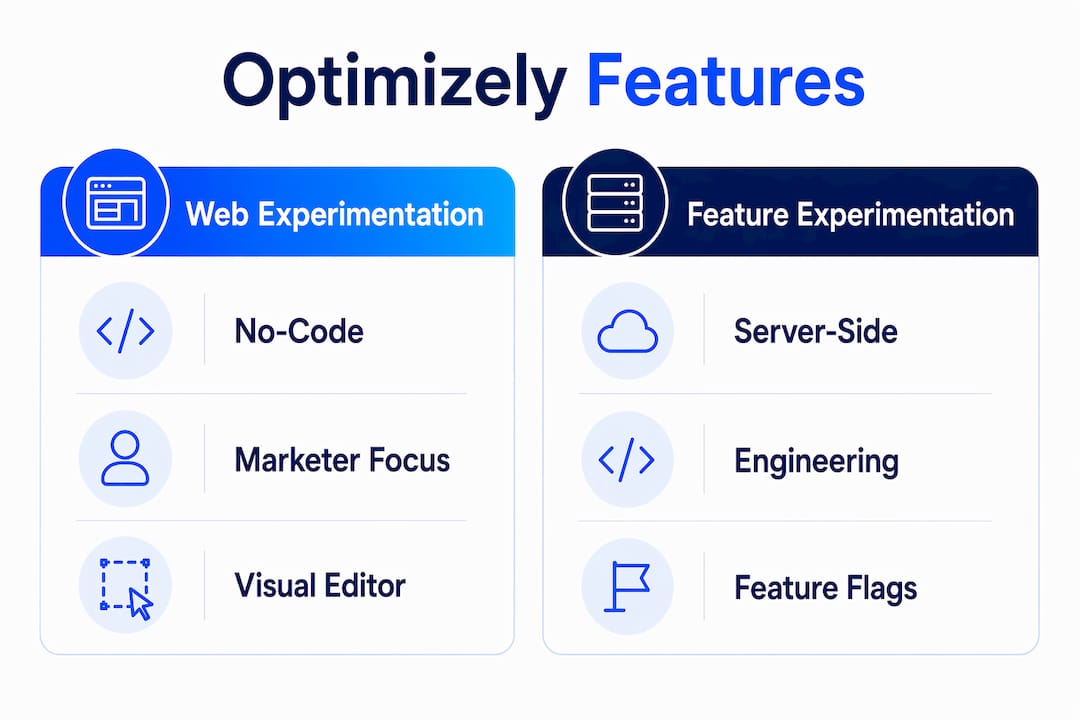
Optimizely offers two distinct experimentation approaches, and understanding the difference determines how your team should structure its testing program. Web Experimentation and Feature Experimentation serve different use cases, and high-performing teams use both.

Web Experimentation is the no-code path. Marketers use a visual editor to build A/B and multivariate tests directly on live pages without writing code. This is the right tool for testing headlines, CTAs, layouts, and landing page copy. It removes the dependency on engineering for most front-end experiments, which means faster test cycles.
Feature Experimentation operates server-side. Engineering teams use feature flags to test backend logic, pricing models, checkout flows, and algorithm changes. This approach supports gradual rollouts, where a feature goes live to 5% of traffic before scaling to 100%. That ramp-up strategy can reduce revenue impact incidents by up to 80%, which is a meaningful risk reduction for any team shipping frequently.
The platform's Stats Engine is a technical differentiator worth understanding. It uses sequential testing methodology to reach statistical significance faster and with fewer false positives than traditional fixed-horizon models. The practical benefit is that you can make confident decisions earlier in an experiment without the "peeking problem" that inflates error rates in standard A/B testing.
| Capability | Best for | Key benefit |
|---|---|---|
| Web Experimentation | Marketing and growth teams | No-code visual editor, fast test setup |
| Feature Experimentation | Engineering and product teams | Server-side flags, gradual rollout control |
| Stats Engine | All experimentation teams | Faster decisions, fewer false positives |
| Opal AI workflows | Personalization and content teams | Automated segmentation, cross-channel delivery |
| CMS and Commerce | Digital experience teams | Unified content and commerce management |
Optimizely has also expanded well beyond testing. The platform now includes CMS, commerce, and AI-driven workflows under its Opal assistant, covering AI image tagging, semantic search, and predictive churn analytics. That breadth positions it as a full digital experience platform rather than a standalone testing tool.
Pro Tip: Start with Web Experimentation to build your team's testing muscle. Once you have a consistent cadence of front-end tests running, introduce Feature Experimentation for backend changes. Mixing both too early creates prioritization confusion.
How do teams use Optimizely to improve conversion rates?
The teams that get the most from Optimizely share one habit: they maintain a structured experiment backlog. A backlog is a prioritized list of test ideas ranked by expected impact and ease of implementation. Without one, testing becomes reactive and inconsistent. With one, teams run experiments continuously and compound their learnings over time. Pairing this with landing page conversion best practices gives marketers a repeatable system for lifting performance.
Here is how high-maturity teams apply Optimizely's platform in practice:
-
Build a test backlog using a scoring framework. Use a model like ICE (Impact, Confidence, Ease) to rank experiments. This keeps the team focused on tests with the highest expected return and prevents low-value tests from consuming capacity.
-
Use gradual feature rollouts to reduce launch risk. Start new features at 5% of traffic, measure business impact at each stage, and scale only when the data supports it. This approach protects revenue while still moving fast.
-
Apply real-time AI segmentation for personalization. Opal's AI tools let marketers create dynamic audience segments based on behavior, CRM data, and web activity without requiring IT support. Personalized experiences consistently outperform generic ones on conversion metrics.
-
Integrate Optimizely with your analytics and CRM stack. Optimizely supports 60+ third-party integrations, including connections to major CRM and analytics platforms. Unified data means your experiment results reflect real customer behavior, not isolated traffic samples.
-
Track KPIs that connect experiments to business outcomes. Revenue per visitor, checkout completion rate, and feature adoption rate are more useful than click-through rate alone. Tying experiments to revenue metrics builds the business case for continued investment in testing.
High-maturity experimentation teams evolve from testing marketing copy to running full-stack experiments that include backend logic and pricing. That evolution takes time, but Optimizely's platform supports every stage of it. For teams just starting out, the no-code experimentation path is the fastest way to build momentum.
Pro Tip: Assign a single owner to each experiment. When accountability is shared across a team, tests stall in review. One owner means one person responsible for shipping, analyzing, and documenting results.
What innovations from recent Opticon events are shaping experimentation?
Opticon 2024 set a clear direction for where Optimizely is taking its platform. The event's creative direction was led by Dan Reid, with over 100 animated assets deployed globally to support a unified brand experience across all three host cities. That level of production investment signals how seriously Optimizely treats Opticon as a brand and product statement.
The thematic focus of Opticon 2024 centered on three ideas that directly affect how marketing and product teams should plan their programs:
- Unified marketing operating system: Optimizely One positions the platform as a single system connecting content, commerce, experimentation, and analytics. Teams no longer need to stitch together separate tools for each function.
- AI-powered personalization at scale: The Opal assistant and related AI workflows enable marketers to predict churn, automate content recommendations, and deliver personalized experiences across channels without manual segmentation work.
- Agent visibility and AI search: Optimizely's partnership with Conductor produced an AI search visibility platform that helps brands understand how AI-generated answers represent their content. This is a new frontier for digital marketers managing organic discovery.
"AI-driven personalization tools in Optimizely enable marketers to predict churn and conversion likely outcomes, closing the gap between static content and dynamic user experience."
The expansion to Stockholm and London also reflects a deliberate move to serve European marketing teams who operate under different regulatory and cultural contexts. For product managers working across regions, this global reach makes Opticon more relevant than a single-city event could be. Understanding how to apply Optimizely personalization strategies across markets is increasingly a competitive advantage. Teams that track Opticon announcements and apply them quickly gain a meaningful head start on competitors still running basic split tests.
Key Takeaways
Opticon and Optimizely together give marketing and product teams the education, tools, and AI capabilities needed to run high-impact experimentation programs that drive measurable conversion growth.
| Point | Details |
|---|---|
| Opticon's global reach | The conference expanded to San Antonio, London, and Stockholm in 2024, serving 2,000+ attendees. |
| Two experimentation paths | Web Experimentation suits marketers; Feature Experimentation suits engineering teams running server-side tests. |
| Stats Engine advantage | Sequential testing reduces false positives and shortens the time to a confident decision. |
| Gradual rollout risk control | Ramping features from 5% to 100% of traffic can reduce revenue impact incidents by up to 80%. |
| AI personalization without IT | Opal and real-time segmentation tools let marketers build dynamic experiences using integrated customer data. |
Why I think most teams underuse what Opticon teaches
Most marketing teams treat Opticon as a highlight reel. They watch the keynote, bookmark a few slides, and return to running the same tests they were running before. That is the wrong way to use it.
The real value of Opticon is in the practitioner sessions, not the product announcements. The teams presenting case studies at Opticon are running experiments at a maturity level most organizations have not reached yet. They are testing pricing logic, backend algorithms, and cross-channel personalization in parallel. That is the gap worth closing.
What I have seen work is treating Opticon as a curriculum, not a conference. Take three or four session themes and build a 90-day experimentation plan around them. If the event highlights AI segmentation, spend the next quarter implementing it. If it emphasizes full-stack testing, assign an engineer to your growth team for one sprint. The analytics-driven marketing approach that Opticon consistently promotes is not theoretical. It is a repeatable system that compounds over time.
The teams I respect most in this space are not the ones with the biggest testing budgets. They are the ones with the most disciplined process. Optimizely's platform gives you the tools. Opticon gives you the playbook. The only variable is whether your team commits to executing consistently.
— Juan
Gostellar and the case for faster, lighter experimentation
Optimizely is a powerful platform, and Opticon makes clear how much it can do. For marketing and product teams at small to medium-sized businesses, the question is often how to get the benefits of rigorous experimentation without the complexity of an enterprise setup.
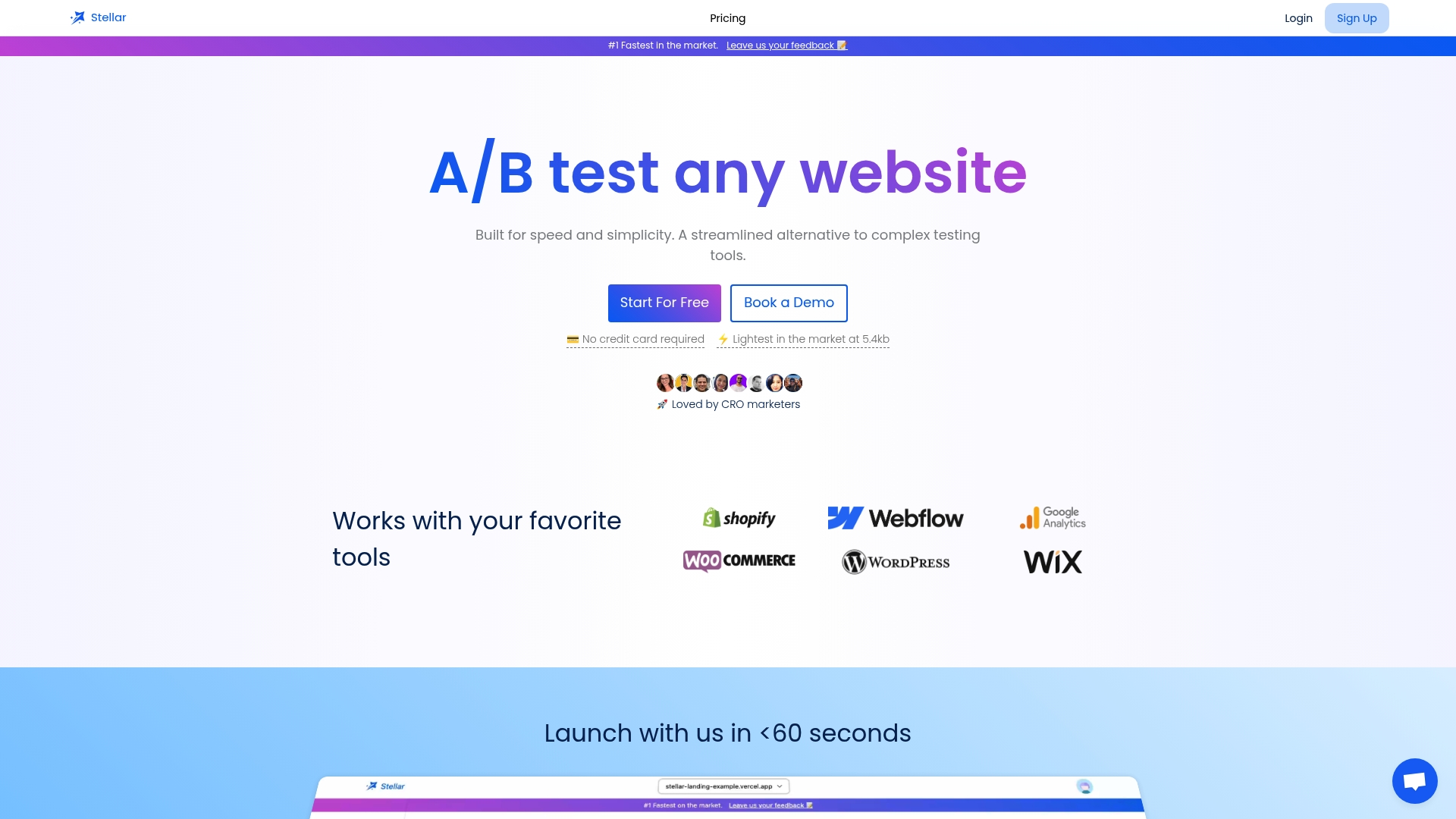
Gostellar is built for exactly that gap. Its 5.4KB script adds no meaningful load to your pages, its no-code visual editor lets marketers launch A/B tests without developers, and its real-time analytics surface results fast enough to act on. Teams that want to apply the Optimizely best practices discussed at Opticon, without the enterprise overhead, will find Gostellar a practical and fast starting point. A free plan is available for sites with under 25,000 monthly tracked users.
FAQ
What is Opticon in the context of Optimizely?
Opticon is Optimizely's flagship annual conference for marketing, product, and digital leaders. It expanded to San Antonio, London, and Stockholm in 2024, drawing 2,000+ attendees focused on experimentation, AI, and digital experience strategy.
How does Optimizely's Stats Engine differ from standard A/B testing?
Optimizely's Stats Engine uses sequential testing, which reaches statistical significance faster and avoids the false positives that occur when teams check results too early in a standard fixed-horizon test.
What is Feature Experimentation in Optimizely?
Feature Experimentation is Optimizely's server-side testing capability. It uses feature flags to roll out changes gradually, from 5% to 100% of traffic, reducing the risk of revenue impact from new features.
Do I need IT support to use Optimizely's personalization tools?
No. Optimizely's AI tools, including Opal, are designed to operate without heavy IT involvement. Marketers can build real-time audience segments using integrated CRM, web, and app data directly within the platform.
What are the main Optimizely alternatives for smaller teams?
Smaller teams that need fast, no-code experimentation without enterprise pricing often turn to lightweight A/B testing platforms. Gostellar is one option built specifically for marketers and growth teams at small to medium-sized businesses.
Recommended
Published: 7/4/2026