
Tech Innovations in Marketing: 50% Faster A/B Testing in 2026
Think A/B testing requires a computer science degree? That myth stops many talented marketers from unlocking better conversion rates. Modern technology has flipped the script entirely. Today's lightweight scripts and no-code editors put experimentation power directly in your hands, no developer required. This guide explores how recent innovations simplify A/B testing and help small business marketers run faster, smarter experiments that drive real growth.
Table of Contents
- Introduction To Modern Marketing Technology Innovations
- Lightweight A/B Testing Scripts And Website Performance
- No-Code Visual Editors: Simplifying Experiment Setup
- Dynamic Keyword Insertion For Personalized Marketing
- Real-Time Analytics And Advanced Goal Tracking For Informed Decisions
- Common Misconceptions About A/B Testing Complexity
- Comparing Traditional And Modern A/B Testing Tools
- Implementing Efficient A/B Testing Solutions In SMBs
- Optimize Your Marketing With Stellar's A/B Testing Solutions
Key Takeaways
| Point | Details |
|---|---|
| Lightweight scripts boost performance | Lightweight A/B testing scripts reduce performance impact by approximately 50% compared to traditional tools. |
| No-code editors increase confidence | Marketers who adopt no-code visual editors report 30% higher confidence in decision-making due to clearer data insights. |
| Personalization drives conversions | Dynamic keyword insertion can boost conversions up to 15% by tailoring messages to user intent. |
| Real-time data accelerates optimization | Real-time analytics cut experiment iteration cycles by 50%, enabling faster campaign adjustments. |
| Modern tools eliminate technical barriers | Today's platforms empower SMB marketers to optimize without coding skills or IT dependencies. |
Introduction to Modern Marketing Technology Innovations
The marketing technology landscape has transformed dramatically over the past few years. Small business marketers once relied on clunky, code-heavy platforms that required developer support for even basic experiments. That era is over.
Today's A/B testing innovations center on three breakthrough areas: ultra-lightweight scripts that preserve site speed, intuitive visual editors that eliminate coding requirements, and intelligent automation that personalizes experiences at scale. These advances directly address the pain points SMB marketers face daily.
Why does this matter for your business? Speed and simplicity translate to competitive advantage. When you can launch tests in minutes instead of weeks, you iterate faster than competitors still stuck in development queues. When your site loads instantly despite running experiments, visitors stay engaged instead of bouncing.
Key innovations reshaping A/B testing for SMBs include:
- Lightweight JavaScript libraries under 6KB that minimize performance impact
- Drag-and-drop visual editors requiring zero HTML or CSS knowledge
- Dynamic content insertion engines that personalize landing pages automatically
- Real-time analytics dashboards providing instant experiment insights
- Cloud-based platforms eliminating complex installation and maintenance
These tools weren't built for enterprise teams with dedicated developers. They're designed specifically for marketers like you who need to move fast, test ideas quickly, and prove ROI without technical roadblocks.
Lightweight A/B Testing Scripts and Website Performance
Website speed directly impacts your bottom line. Every extra second of load time costs conversions. Traditional A/B testing scripts often weigh 10 to 15KB or more, adding noticeable delays that frustrate visitors.
Lightweight A/B testing platforms solve this problem elegantly. Modern solutions deliver full testing functionality in scripts as small as 5KB. That's roughly the size of a tiny thumbnail image.
The impact of script size on page load becomes clear when you examine the numbers. Lightweight A/B testing scripts reduce performance impact by approximately 50% compared to traditional alternatives. Smaller scripts mean faster page rendering, better Core Web Vitals scores, and happier visitors who stick around to convert.

Here's how different script weights compare:
| Script Type | Typical Size | Load Impact | Bounce Rate Effect |
|---|---|---|---|
| Traditional heavy | 12-15KB | High | Increases 8-12% |
| Mid-weight | 7-10KB | Moderate | Increases 4-6% |
| Lightweight modern | 5-6KB | Minimal | Increases <2% |
| Ultra-lightweight | 3-5KB | Negligible | No measurable impact |
The performance advantage compounds across mobile networks where bandwidth is limited. A lightweight script loads almost instantly even on 3G connections, while heavyweight alternatives can take several seconds.
Pro Tip: Always check a tool's script size before committing. Request documentation showing actual file weights, not marketing claims. Tools advertising performance-first split testing should transparently publish their script metrics.
Beyond speed, lightweight scripts also:
- Reduce server resource consumption and hosting costs
- Improve SEO rankings through better page experience signals
- Decrease infrastructure complexity and maintenance burden
- Enable testing on high-traffic pages without performance penalties
No-Code Visual Editors: Simplifying Experiment Setup
Remember waiting days or weeks for developers to implement simple headline changes? Those delays kill momentum and waste opportunities. No-code visual editors eliminate that bottleneck entirely.
These tools work like familiar design software. You see your live website, click elements you want to test, and make changes through an intuitive interface. No HTML tags, no CSS classes, no JavaScript functions to worry about.
Marketers who adopt no-code visual editors report 30% higher confidence in decision-making due to clearer data insights. When you control the entire experiment process, you understand your tests more deeply and trust results more completely.
Time savings add up quickly. Tasks that once took hours of coordination now take minutes. One marketer we know reduced test setup time from an average of three days (including developer queue time) to under 20 minutes using no-code visual editors.
Key capabilities that make visual editors powerful:
- Point-and-click element selection without inspecting code
- Live preview showing exactly how variations will appear
- Built-in templates for common test types like button colors or form layouts
- Undo/redo functionality for risk-free experimentation
- Version history tracking all changes automatically
Accessibility improves dramatically too. Junior marketers and interns can run sophisticated tests independently. Content specialists can optimize copy without bothering design teams. Product managers can validate hypotheses without consuming engineering resources.
Pro Tip: Start with simple tests to build confidence with visual editors. Try button color changes or headline swaps before tackling complex layout modifications. Success breeds momentum.
The democratization of testing means more ideas get validated. When anyone on your team can launch experiments, innovation accelerates. You're no longer limited by developer availability or technical gatekeepers.
Dynamic Keyword Insertion for Personalized Marketing
Generic landing pages convert poorly because they speak to everyone and no one simultaneously. Personalization changes that equation. Dynamic keyword insertion automatically tailors page content to match what brought each visitor to your site.
Here's how it works: Someone searches for "blue running shoes" and clicks your ad. They land on a page where the headline dynamically displays "Find Your Perfect Blue Running Shoes" instead of a generic "Shop Running Shoes." The technology swaps keywords in real time based on search terms, ad groups, or URL parameters.
Conversion lifts from personalization range from 10% to 15% across most industries. Why? Visitors see immediate relevance. The cognitive load of figuring out whether your page matches their need disappears. They feel understood instantly.
Integrating dynamic insertion with A/B testing creates powerful combinations. You can test different personalization approaches: Should keywords appear in headlines, subheadings, or body copy? Does exact match or semantic variation perform better? These experiments reveal what resonates most with your audience.
Practical implementation tips:
- Start with high-intent keywords where personalization impact is clearest
- Set fallback text for cases where dynamic insertion fails or seems awkward
- Test personalized versus generic versions to quantify actual lift
- Balance keyword relevance with natural-sounding copy
- Monitor quality scores in paid campaigns as relevance improves
The beauty of modern platforms is that dynamic insertion requires no coding either. You set up rules through simple forms, preview results, and launch. The system handles the technical complexity behind the scenes.
Common use cases extend beyond search ads. Email marketing benefits from personalized subject lines. Landing pages can adapt based on referral source. Product pages might highlight features matching user segments. Once you implement the foundation, creative applications multiply.
One caution: avoid over-personalization that feels creepy or intrusive. Visitors understand ads match search terms. They get weirded out by personalization that seems to know too much. Strike a balance between relevance and respect for privacy.
For A/B testing for landing pages, dynamic keyword insertion adds a critical personalization layer that static tests miss. You're not just testing layouts, you're testing relevance itself.
Real-Time Analytics and Advanced Goal Tracking for Informed Decisions
Waiting overnight or longer for experiment results feels like driving with your eyes closed. You make decisions based on stale data while conditions change. Real-time analytics cut experiment iteration cycles by 50%, letting you spot winners and losers immediately.
Traditional batch reporting creates frustrating delays. You launch a test Monday morning but don't see meaningful data until Tuesday evening. By then, you've potentially wasted a full day's traffic on a losing variation.
Real-time marketing analytics flip that script. Within minutes of launching, you see visitor behavior patterns emerging. Within hours, statistical significance indicators guide decisions. You act on fresh intelligence instead of yesterday's news.
Advanced goal tracking adds crucial depth. Simple conversion tracking only tells you whether visitors completed desired actions. Multi-step tracking reveals the entire journey: which variation drove more email signups, which led to higher quality leads, which generated better long-term retention.
Real-time analytics with advanced goal tracking improve campaign optimization success rates by 15% within the first month. Better data equals better decisions.
Key metrics improved by real-time capabilities:
| Metric | Traditional Reporting | Real-Time Analytics | Improvement |
|---|---|---|---|
| Decision speed | 24-48 hours | 2-4 hours | 85% faster |
| Iteration cycles | 7-10 days | 3-5 days | 50% faster |
| Traffic waste | 15-20% | 5-8% | 60% reduction |
| Test confidence | Moderate | High | 30% increase |
Beyond speed, real-time systems enable dynamic allocation. When one variation clearly outperforms, traffic automatically shifts toward the winner. You maximize conversions during the test itself instead of after.
Goal tracking should extend beyond surface metrics. Track micro-conversions that predict macro success. Monitor engagement signals like time on page, scroll depth, and interaction rates. These leading indicators often show significance before final conversions do.
Practical applications for SMB marketers:
- Catch technical errors immediately before they waste significant traffic
- Identify unexpected segmentation insights as patterns emerge
- Adjust budgets or pause campaigns based on real performance
- Share live dashboards with stakeholders for transparent collaboration
The psychological benefit matters too. Real-time visibility reduces anxiety. You're not flying blind hoping tests work. You see results forming and can course-correct as needed.
Common Misconceptions About A/B Testing Complexity
Myths about A/B testing complexity prevent countless marketers from realizing their potential. Let's destroy these false beliefs with facts.
Myth: You need coding skills to run effective A/B tests. Reality: No-code platforms make testing accessible to anyone comfortable with basic website editing. If you can use WordPress or send formatted emails, you can run sophisticated experiments.
Myth: Complex tests with many variables always yield better insights. Reality: Simple tests often provide clearer, faster answers. Testing one element at a time isolates what actually drives results. Complexity creates confusion and extends timelines without proportional benefit.
Myth: A/B testing tools don't significantly impact website performance. Reality: Script weight and implementation quality dramatically affect load times. The wrong tool can slow your site enough to negate any conversion gains from testing.
Myth: Small businesses lack the traffic volume for statistically valid tests. Reality: Modern tools optimize for smaller sample sizes and reach significance faster. You need thoughtful test design, not massive traffic.
Myth: Setting up tests requires weeks of preparation and technical planning. Reality: With visual editors and templates, most tests launch in under an hour. The preparation myth stems from outdated enterprise tools that did require extensive setup.
Why do these myths persist? Legacy tools from the early 2000s were legitimately complex. They required technical skills, impacted performance heavily, and took ages to implement. Those tools shaped perceptions that no longer match reality.
SMB marketers sometimes inherit assumptions from enterprise-focused content. What's true for Fortune 500 companies running massive programs doesn't apply to lean teams testing efficiently. You don't need dedicated optimization teams or six-figure tool budgets.
The accessibility of modern platforms means the only real barrier is belief. Once you try current tools and experience how simple testing has become, the myths evaporate. Your first successful experiment proves you can do this.
Comparing Traditional and Modern A/B Testing Tools
Seeing concrete differences between tool generations clarifies why upgrading matters. The gap has widened substantially as modern platforms evolved.
| Feature | Traditional Tools | Modern Tools |
|---|---|---|
| Script size | 12-15KB+ | 5-6KB or less |
| Coding required | Yes, for most tests | No, visual editors |
| Setup time | Days to weeks | Minutes to hours |
| Real-time data | Rarely available | Standard feature |
| Personalization | Manual implementation | Built-in dynamic insertion |
| Mobile optimization | Often problematic | Responsive by default |
| Learning curve | Steep, technical | Gentle, intuitive |
| Cost structure | Enterprise pricing | SMB-friendly tiers |
Performance impact tells an important story. Traditional tools often slow page loads by 200 to 400 milliseconds. That delay costs 5% to 10% of potential conversions, creating a paradox where testing actually hurts results.
Speed-focused A/B testing tools maintain load times within 50 milliseconds of baseline. Visitors never notice the difference. You gain optimization benefits without performance penalties.
Conversion rate improvements shift meaningfully too. Early adopters of modern platforms report 20% to 35% better overall conversion rates after six months compared to previous tools. Better data quality and faster iteration cycles compound over time.
Key advantages when switching to modern solutions:
- Eliminate developer dependencies and coordination overhead
- Launch more tests in less time, accelerating learning velocity
- Maintain site speed and user experience during experiments
- Access features previously available only at enterprise price points
- Reduce total cost of ownership through simpler infrastructure
The transition doesn't require burning existing processes. Most modern tools integrate with analytics platforms, CRMs, and marketing automation systems you already use. Migration paths are straightforward, often completed in days rather than months.
For SMB marketers, the choice increasingly seems obvious. Why struggle with tools designed for different needs when alternatives exist specifically for your context?
Implementing Efficient A/B Testing Solutions in SMBs
Theory matters less than action. Here's your practical roadmap for adopting modern A/B testing successfully.
-
Assess your current situation honestly. Document pain points with existing processes. How long do tests take from idea to launch? What percentage of proposed experiments actually run? Where do bottlenecks occur? Understanding your starting point guides tool selection.
-
Evaluate tools based on performance metrics. Request script size specifications and load time impact data. Ask for case studies from similar businesses. Test free tiers or trials with real experiments on actual pages. Numbers beat marketing promises.
-
Prioritize no-code visual editors unless your team genuinely prefers coding. Most marketers vastly overestimate their willingness to write code regularly. Interfaces that feel intuitive during demos remain intuitive during daily use. Complexity that seems manageable initially becomes friction that kills adoption.
-
Implement dynamic keyword insertion early in your testing program. The conversion lift comes relatively easy compared to effort required. Start with paid search landing pages where personalization impact is most obvious, then expand to other channels.
-
Choose platforms offering comprehensive real-time analytics and goal tracking. Delayed reporting wastes your most valuable asset, time. Multi-step funnels reveal insights that simple conversion tracking misses. These capabilities should be standard, not premium upgrades.
-
Start with quick wins to build momentum. Test obvious hypotheses first: prominent CTAs, compelling headlines, trust signals. Early successes create organizational buy-in and personal confidence. Save complex multivariate tests for after you've mastered fundamentals.
Common pitfalls to avoid during implementation include overcomplicating initial tests, neglecting mobile experience, ignoring statistical significance thresholds, and failing to document learnings systematically. Each mistake is recoverable but wastes time and budget.
For teams operating without developer support, tool selection becomes even more critical. Ensure platforms provide adequate support resources: documentation, tutorials, community forums, and responsive customer service.
Integration with existing systems deserves attention too. Modern platforms typically offer robust APIs for connecting to your tech stack. If you need advanced A/B testing integration APIs, verify capabilities before committing.
Success metrics should extend beyond conversion rates. Track testing velocity (experiments launched per month), team confidence levels, time saved versus previous processes, and overall program ROI. These indicators reveal whether your implementation truly works.
Optimize Your Marketing with Stellar's A/B Testing Solutions
Everything discussed here exists in one platform built specifically for marketers like you. Stellar delivers lightweight, no-code A/B testing designed for SMBs that need speed without sacrificing power.
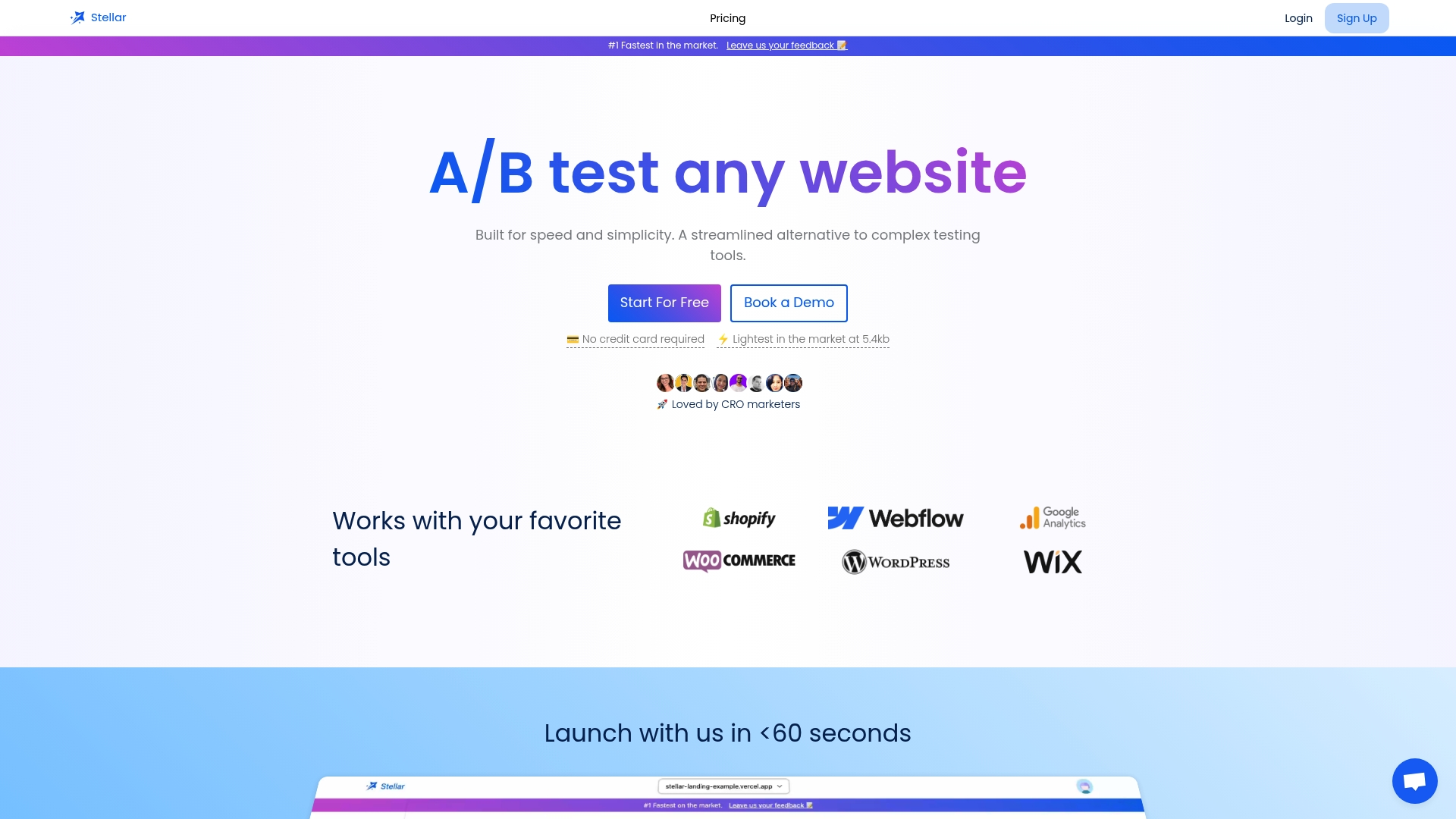
Our 5.4KB script maintains blazing site speed while you run sophisticated experiments. The visual editor lets you launch tests in minutes, not days. Dynamic keyword insertion personalizes every visitor experience automatically. Real-time analytics show results as they happen.
You don't need technical skills or developer support. You need tools that respect your time and amplify your abilities. That's exactly what we built.
Explore our comprehensive guides on A/B testing best practices to deepen your optimization knowledge. Learn proven strategies in our landing page A/B testing guide. Discover how to succeed completely independently with our resource on A/B testing without developer support.
Thousands of marketers already optimize faster and smarter with Stellar. Join them today and transform how you grow your business through experimentation.
FAQ
What skills do I need to start A/B testing with modern platforms?
You need basic familiarity with your website and comfort using software interfaces similar to email editors or content management systems. Modern no-code platforms require zero coding knowledge. If you can edit a webpage visually or format a document, you can run A/B tests successfully.
How much faster can I expect my testing cycles to be?
Most marketers reduce iteration cycles by 50% or more when switching to modern platforms. Tests that previously took a week to set up and analyze now complete in three to four days. Real-time analytics let you spot clear winners within hours instead of waiting days for batch reports.
Can dynamic keyword insertion work without coding?
Yes, completely. Modern platforms handle dynamic insertion through simple form-based configuration. You specify which keywords to swap, set fallback text, and preview results. The system generates and manages all code automatically. Implementation takes minutes, not developer hours.
Will lightweight scripts really not affect my page speed?
Lightweight scripts under 6KB add negligible load time, typically under 50 milliseconds. That's imperceptible to visitors and doesn't impact Core Web Vitals or SEO rankings. Compare this to traditional 12KB+ scripts that add 200 to 400 milliseconds, a delay visitors definitely notice and search engines penalize.
What if I don't have developer support for my A/B tests?
You don't need it. That's the entire point of modern no-code platforms. Visual editors, pre-built templates, and intuitive interfaces eliminate technical dependencies. Thousands of solo marketers and small teams run sophisticated testing programs without ever involving developers. Choose tools designed for marketer independence.
Recommended
- Marketing Automation Trends 2025: 40% Faster A/B Testing
- Fast Testing, Fast Results: Speed-Focused A/B Tools for 2025
- Advanced A/B Testing Strategies for CRO Marketers in 2025
- Best A/B Test Ideas for Marketers in 2025
- Crucial Digital Marketing Trends to Know in 2023 - Part 1 | Kickass Online
- Content Marketing Strategies 2025: Humanizing Digital Impact